

 Back
Back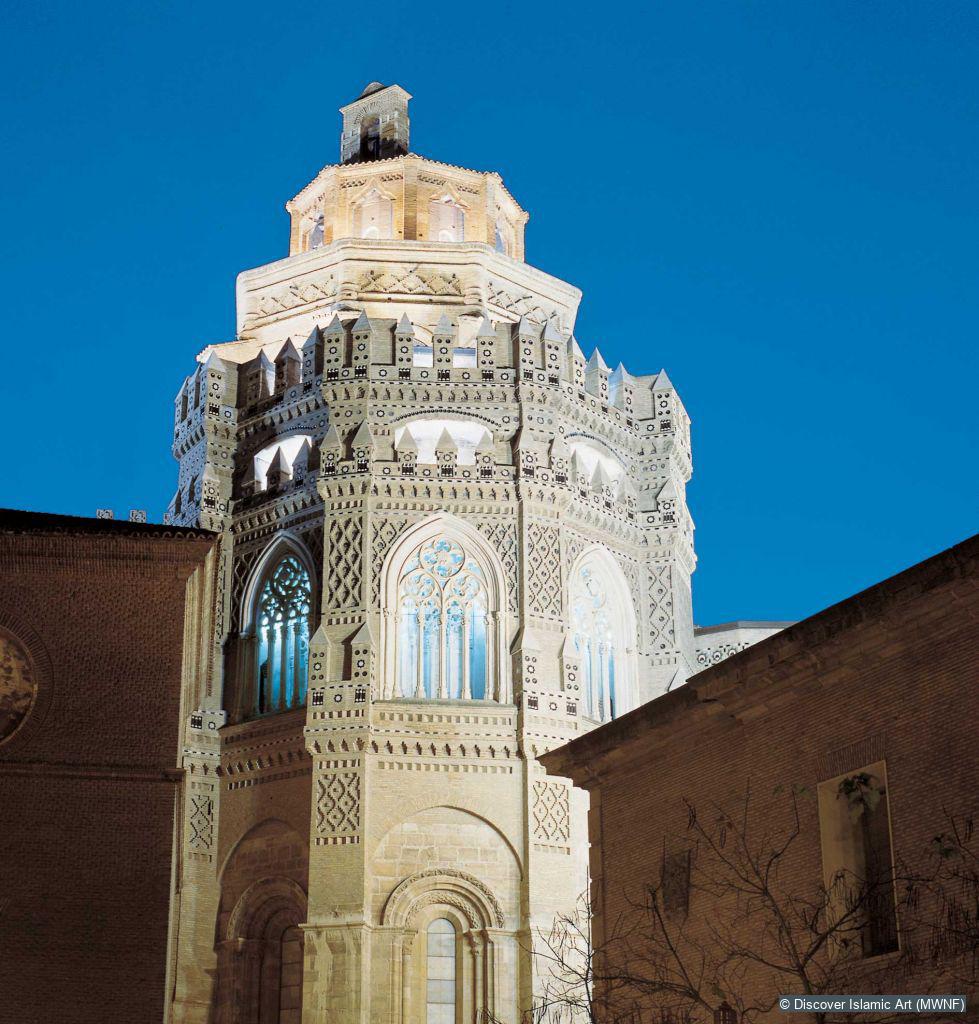
Name of Monument:
La Seo
Also known as:
Cathedral of San Salvador
Location:
Plaza de la Seo, s/n, Saragossa, Spain
Date of Monument:
14th-16th centuries
Architect(s) / master-builder(s):
Parroquieta de San Miguel: Sevillian foremen Garci and Lope Sánchez; early 15th century work: Architect Mahoma Rami; dome, early 16th century: foreman Juan Lucas, ‘Botero’, Christian labourers Antón de Sariñena, Master Gil and Master Gombáu, Mudejar labourers Juce de Gali, Xamar, Braym Monferriz and Master Arrami.
Period / Dynasty:
Mudéjar
Patron(s):
Archbishop Pedro López de Luna (1317–45); Pope Benedict XIII (1394–1422 or 1423).
Description:
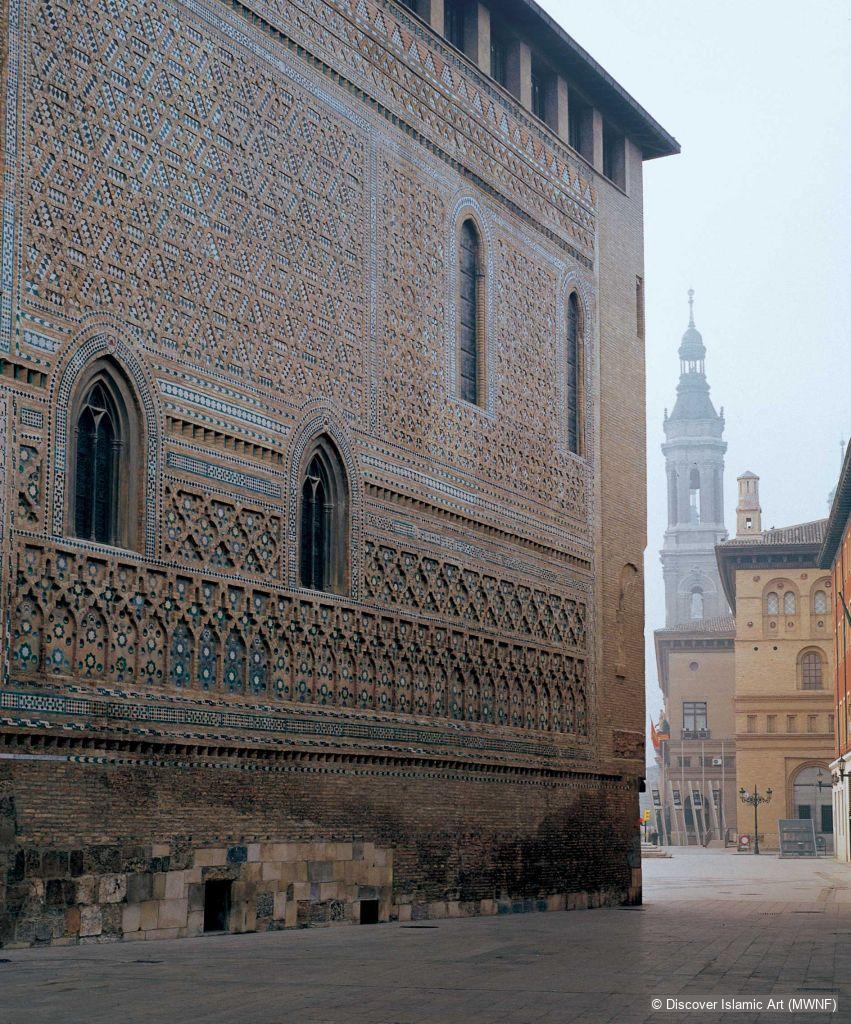
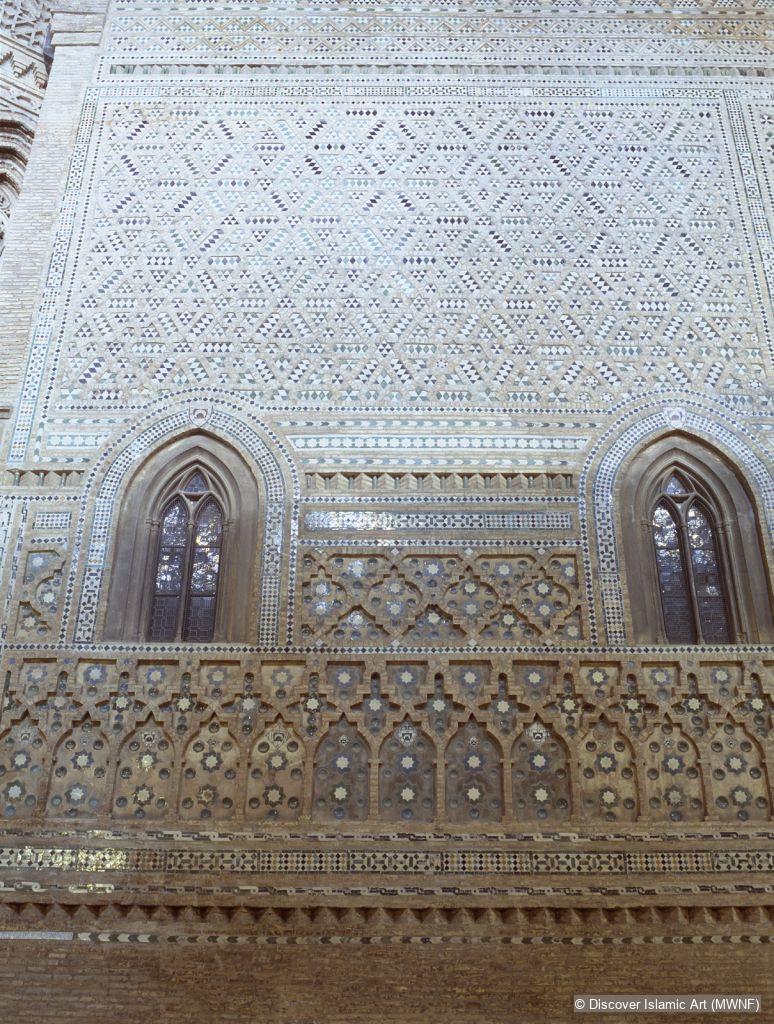
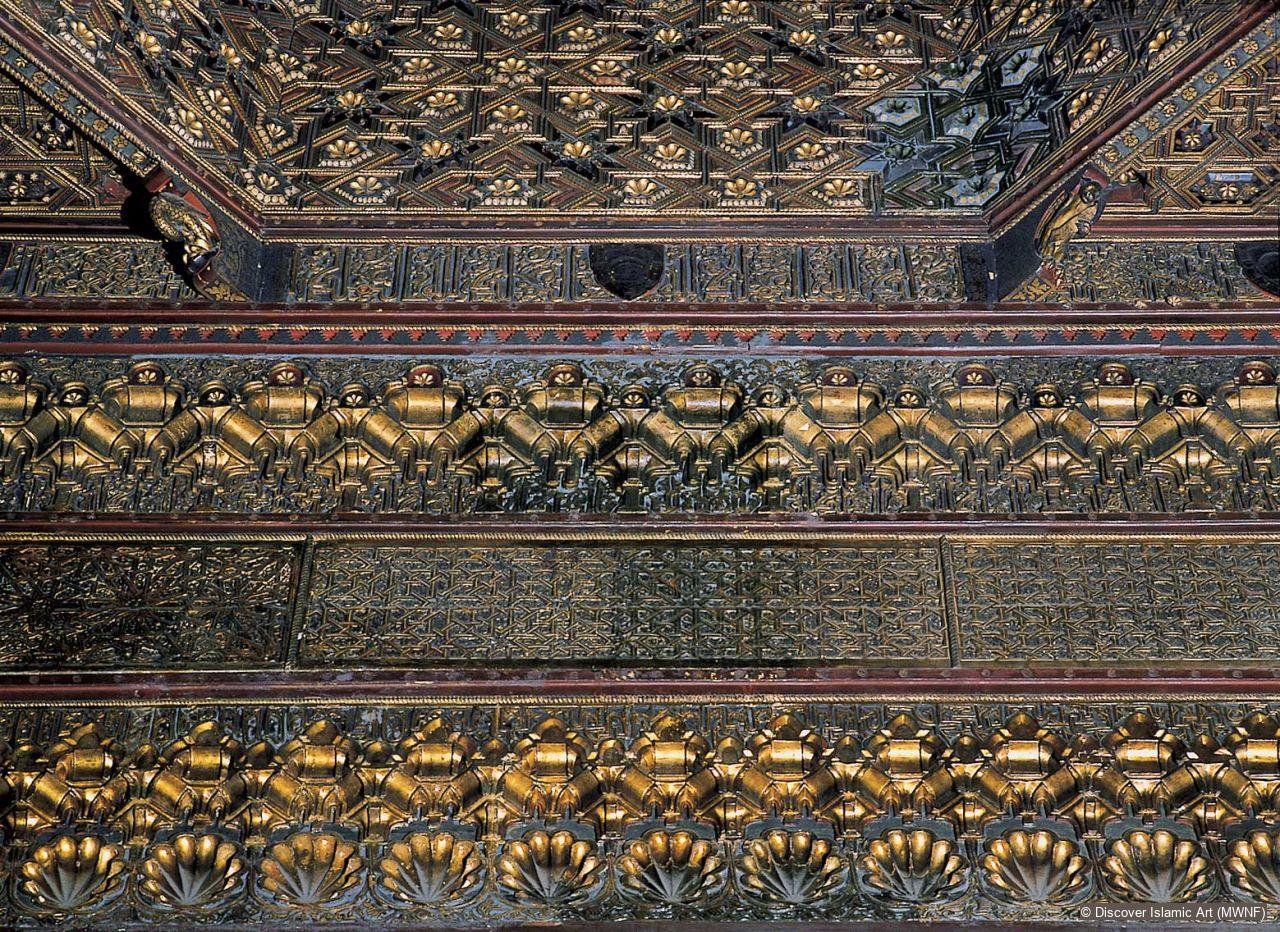
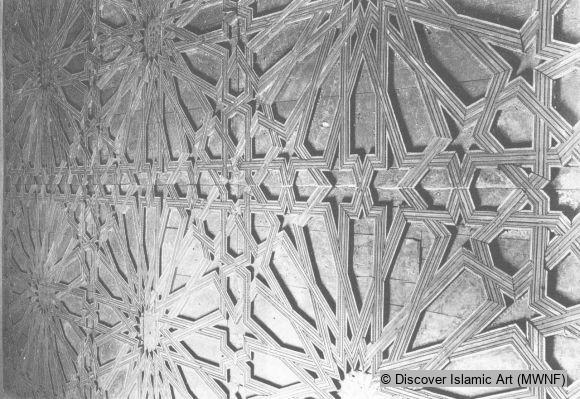
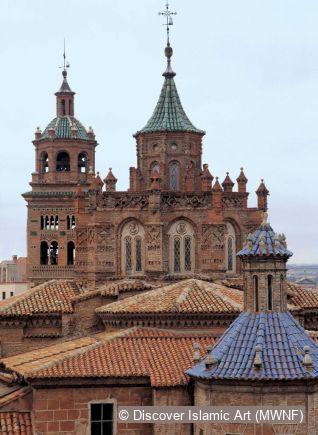
Saragossa Cathedral is the most outstanding example of Mudéjar architecture in Aragon. It was built in successive stages and various different styles. Mudéjar art is essentially represented in three parts of the church located in the sanctuary: the current Parroquieta de San Miguel, the upper part of the apses and the dome, structures erected during the pontificates of some illustrious individuals. The Mudéjar cathedral was constructed with three naves and a transept by Pedro López de Luna in the first half of the 14th century. The rectangular Parroquieta, backed onto the apses of the cathedral towards the west wall, is in fact the chapel of rest of Archbishop D. Lope Fernández de Luna (1351–c.1380) and was constructed between 1374 and 1379 by the Sevillian foremen Garci and Lope Sánchez. The outside wall is noteworthy for its protruding brickwork, an Aragon tradition, and glazed ceramic, a harmonious mix of traditional local motifs and Sevillian ones, such as the octagonal moamar (paired beamed) ceiling. The Gothic alabaster sepulchre is the work of the sculptor Pere Moragues.
Structural problems, attributable to the small size of the Romanesque apses and the greater elevation of the Gothic work, combined with the lack of buttresses for the dome in this area, caused the apse to collapse. The then Pope Benedict XIII, of the see of Avignon, raised the apses and reconstructed the dome on top of the Romanesque stone foundations to a considerable height, giving the building the air of a fortress crowned with battlements in the Almohad style. The scope of the project is clear from the meeting held on 24 February 1403 to plan the work. The work was commissioned from the highly regarded Muslim architect Mahoma Rami and built between 1404 and 1408. Rami's professional quality is reflected in his fees and the high social standing he was afforded. The pontiff's taste for the Mudéjar style is evident from the large number of works commissioned in Aragon. The second dome also collapsed almost completely, although the Pope's coat of arms survived on the upper part of the transverse ribs. In February 1498 one of the pillars collapsed. In a meeting convened in 1500, attended by the architect Enrique Egas, it was agreed to pull it down and build a new one, which still stands. The work was started in 1505 and went on to 1520, possibly with the help of the famous architect. Both Christian labourers (Antón de Sariñena, Master Gil and Master Gombau) and Mudéjar labourers (Juce de Gali, Xamar, Braym Monferriz and Master Arrami) were employed under the direction of the foreman Juan Lucas, 'Botero'. The design of this third, Renaissance, dome is dominated by solidity over aesthetics. Seen from the inside, the design retains the Islamic tradition of intertwined arches forming eight-pointed stars, a perfect system for vaulting that was used in the extension of the Great Mosque of Córdoba undertaken by al-Hakam II.
Built on the site of the Roman forum of Caesar Augusta and the great mosque of Muslim Saraqosta, La Seo was built in successive stages and in different artistic styles, which is what gives it its distinctive character.
Mudéjar art is present in the sanctuary, where the Parroquieta de San Miguel, apses and dome are found. On the outside, a brick wall built in the Aragonese tradition and decorated with glazed ceramics with motifs from the local area and Seville is particularly noteworthy.
How Monument was dated:
From documentation relating to the cathedral's various promoters.
Selected bibliography:
Borrás Gualís, G., Arte Mudéjar Aragonés, Saragossa, 1985, Vol. II, pp.466–70.
Borrás Gualis, G., Arte Mudéjar, Madrid, 1992, p. viii.
Borrás Gualis, G., “La Seo o Catedral de San Salvador”, in El Arte Mudéjar: La Estética Islámica en el Arte Cristiano, Madrid, 2000, pp.93–5.
Franco Mata, á.,”'El Papa Luna y la Cultura de Su Tiempo”, in Almogaren: X Jornadas de Historia de la Iglesia (VI Centenario de la Diócesis Canariense y Rubicense), 34, Gran Canaria, 2004, pp.83–115.
Mudéjar Art: Islamic Aesthetics in Christian Art, pp.93–5.
Citation of this web page:
Ángela Franco "La Seo" in Discover Islamic Art, Museum With No Frontiers, 2026. 2026.
https://islamicart.museumwnf.org/database_item.php?id=monument;ISL;es;Mon01;31;en
Prepared by: Ángela FrancoÁngela Franco
Ángela Franco es Jefa del Departamento de Antigüedades Medievales en el Museo Arqueológico Nacional.
Obtuvo el Grado de Doctor por la Universidad Complutense de Madrid con la tesis Escultura gótica en León y provincia, premiada y publicada parcialmente (Madrid, 1976; reed. León, 1998); y la Diplomatura en Paleografía y Archivística por la Scuola Vaticana di Paleografia, Diplomatica e Archivistica, con la tesis L'Archivio paleografico italiano: indici dei manoscritti, publicada en castellano (Madrid, 1985). Becas de investigación: beca posdoctoral del Ministerio de Asuntos Exteriores, Academia Española de Bellas Artes de Roma (1974-75); beca posdoctoral del Ministerio de Educación y Ciencia, Academia Española de Bellas Artes de Roma (1975-77); beca de la Fundación Juan March de Madrid (1978).
Tiene en su haber 202 publicaciones, fundamentalmente sobre arte medieval cristiano, en especial la iconografía: Crucifijo gótico doloroso, Doble Credo, Danzas de la Muerte, temática bíblica en relación con la liturgia (el Génesis y el Éxodo en relación con la vigilia Pascual) o con el teatro (Secundum legem debet mori, sobre el “pozo de Moisés” de la cartuja de Dijon). Es autora de cuatro catálogos monográficos del Museo Arqueológico Nacional, entre ellos el de Dedales islámicos (Madrid, 1993), y de publicaciones sobre escultura gótica y pintura en la catedral de León y sobre escultura gótica en Ávila, así como de numerosas fichas para catálogos de exposiciones.
Ha participado en innumerables congresos nacionales e internacionales, presentando ponencias y mesas redondas, y ha dirigido cursos y ciclos de conferencias. Es Secretaria de Publicaciones en el Museo Arqueológico Nacional desde 1989.
Copyedited by: Rosalía AllerRosalía Aller
Rosalía Aller Maisonnave, licenciada en Letras (Universidad Católica del Uruguay), y en Filología Hispánica y magíster en Gestión Cultural de Música, Teatro y Danza (Universidad Complutense de Madrid), ha obtenido becas de la Agencia Española de Cooperación Internacional y la Universidad Nacional de Educación a Distancia de Madrid, así como el Diplôme de Langue Française (Alliance Française), el Certificate of Proficiency in English (University of Cambridge) y el Certificado Superior en inglés y francés (Escuela Oficial de Idiomas de Madrid). Profesora de Estética de la Poesía y Teoría Literaria en la Universidad Católica del Uruguay, actualmente es docente de Lengua Castellana y Literatura en institutos de Enseñanza Secundaria y formación del profesorado en Madrid. Desde 1983, ha realizado traducción y edición de textos en Automated Training Systems, Applied Learning International, Videobanco Formación y El Derecho Editores. Integra el equipo de Museo Sin Fronteras desde 1999 y ha colaborado en la revisión de los catálogos de “El Arte Islámico en el Mediterráneo”. Así mismo, ha realizado publicaciones sobre temas literarios y didácticos, ha dictado conferencias y ha participado en recitales poéticos.
Translation by: Laurence Nunny
Translation copyedited by: Monica Allen
MWNF Working Number: SP 35
RELATED CONTENT
Related objects

Related monuments


Islamic Dynasties / Period
On display in
Exhibition(s)
Download
As PDF (including images) As Word (text only)