

 Back
Back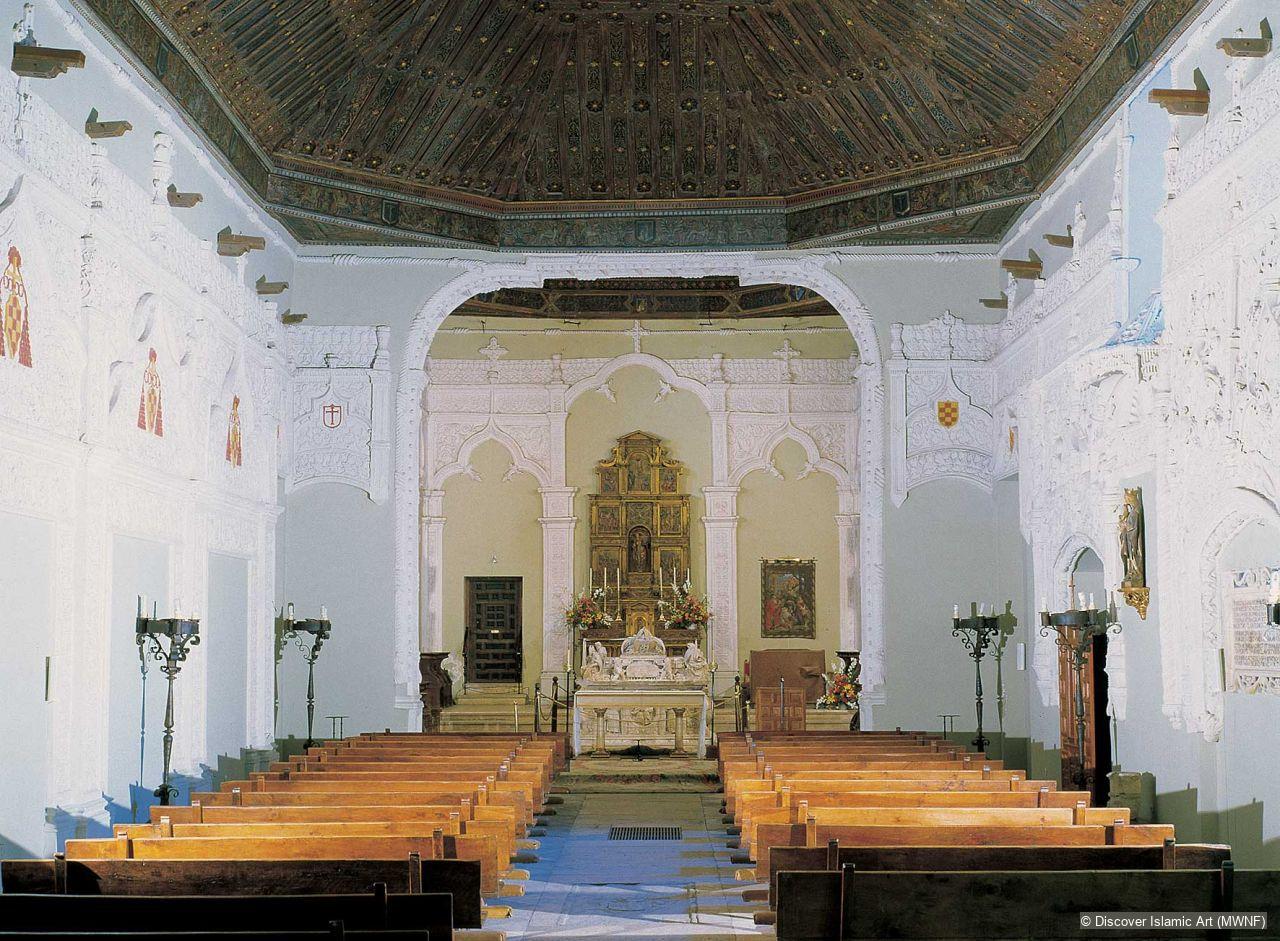
Name of Monument:
University of Alcalá de Henares
Location:
Plaza de San Diego, s/n, Alcalá de Henares, Madrid, Spain
Date of Monument:
Between 1516 and 1520
Architect(s) / master-builder(s):
Auditorium, possibly following Pedro Gumiel’s design (c. 1460–1518); stucco plasterers: Bartolomé Aguilar, Hernando de Sahagún and Pedro de Villarroel; painters and gilders: Diego López, Luis Medina and Alonso Sánchez; carpentry under the management of Andrés de Zamora.
Period / Dynasty:
Mudéjar
Patron(s):
Cardinal Cisneros (1436-1517).
Description:
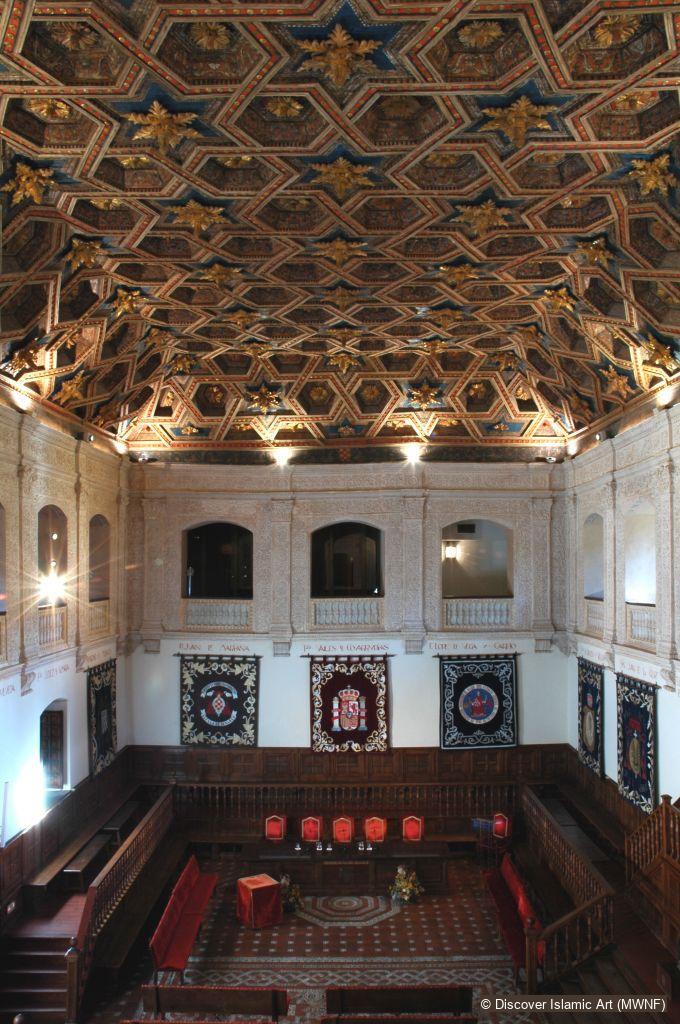
The auditorium of the University of Alcalá was built between 1516 and 1520, maybe in 1517, possibly according to the design of Pedro Gumiel, who must have already been dead as his name is not included among the artists who worked on it. He was Cardinal Cisnero's foreman, whose most important work is the Magistral Church of Alcalá. He is the craftsman who best personifies the so-called 'Cisneros style', a faithful reflection of the Franciscan prelate's character: the modesty, frailness of the plaster and the absence of any monumentality fit perfectly with the Franciscanism of the great man. Its geographical location corresponds to the life and passions of the prelate: Toledo and Alcalá in particular. The cardinal did not commission any work without consulting the 'honourable Gumiel', as appears in all of the records from the time. He was an alderman of Alcalá, where he undoubtedly enjoyed great prestige and fame. Work on the auditorium, or scholastic theatre, was carried out by the stucco plasterers Bartolomé Aguilar, Hernando de Sahagún and Pedro de Villarroel, and the painters and gilders Diego López, Luis Medina and Alonso Sánchez. The decorative design also suggests the contribution of the Santa Cruz brothers, who had previously worked on San Ildefonso church in the same city. The carpentry work would have been directed by Andrés of Zamora with other assistants including Pedro Izquierdo.
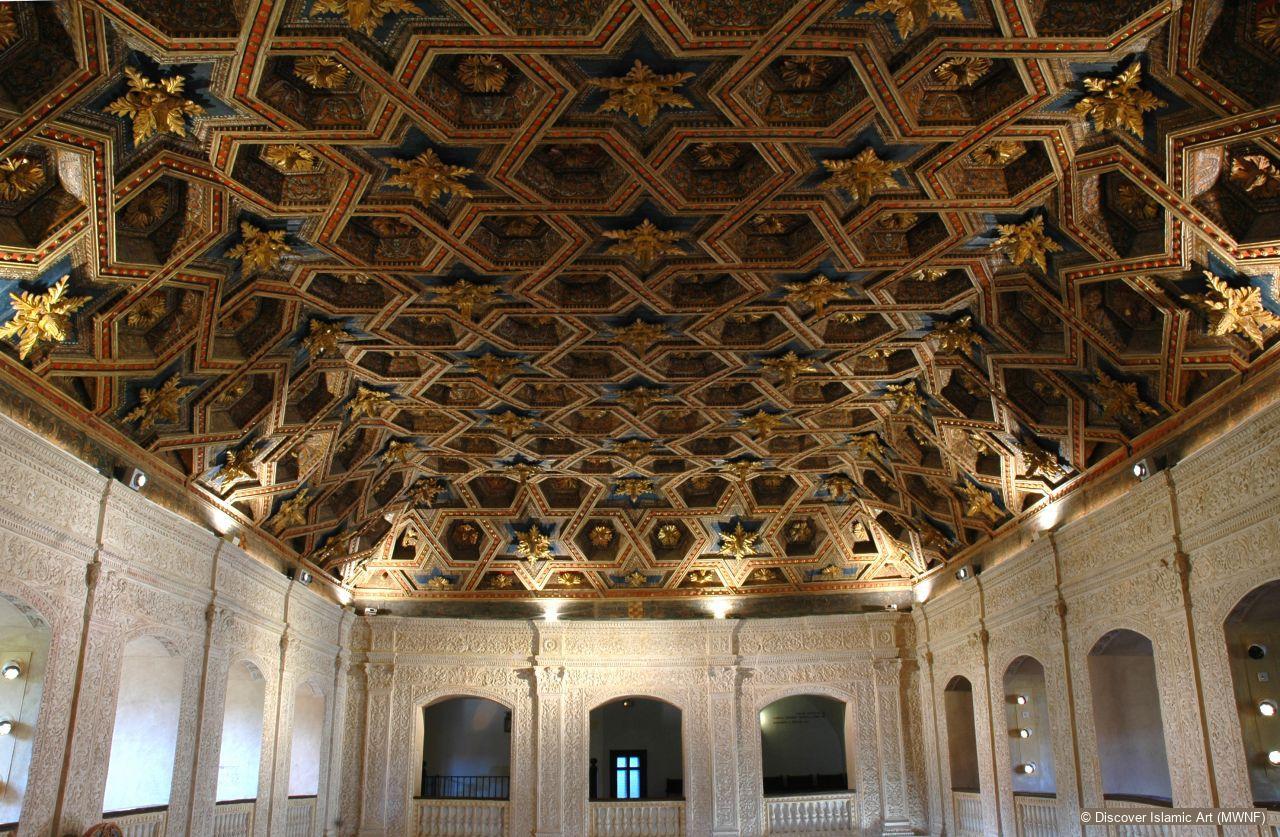
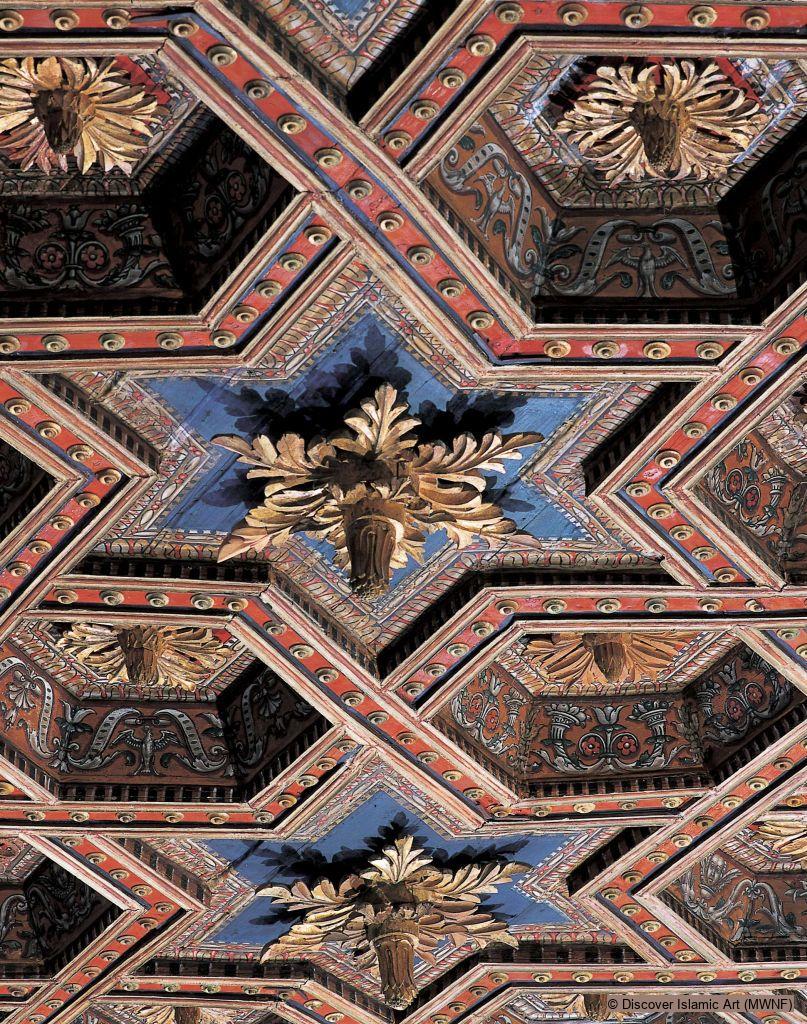
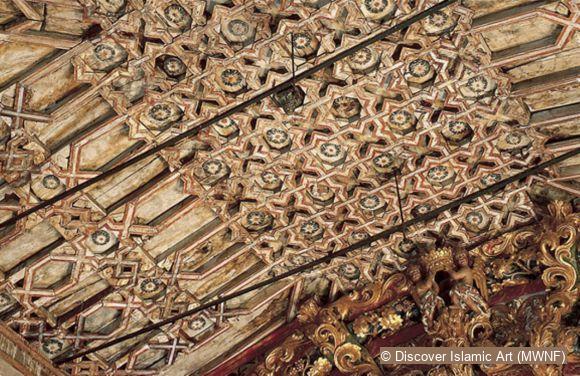
The auditorium is a very high rectangular room covered with a knotwork, trough-shaped roof with struts that imitates a rafter structure. The lower part of the walls are uncovered; only in the upper part does a gallery reveal the architectonic system of depressed arches between pilasters. It is designed as a sumptuous frieze of close-knit decoration. Everything is covered with ornamental work within vertical and horizontal panels in perfect symmetry. There are no human figures, but there are conventional classical flowers, vases and boxes making fanciful towers or compositional centrepieces. The low relief helps to suggest some sort of fabric or brocade. Castillo Oreja (see Bibliography) notes that the design is completed a Renaissance style related to the Codex Escurialensis, with the cardinal's coat of arms on the wooden beams (arrocabes). In his iconographic analysis of the roof, Toajas (see Bibliography) comments that Cisnero's artistic choices combine the native style with the renewal of antiquity brought by the Renaissance. The auditorium fits in with the Mudéjar tradition without being heavy or baroque because, unlike Tuscan art, its vault maintains a degree of subtlety. We are aware of the historical data on the successive sales of the university building until it came into the possession of the Padres Escolapios, as well as some Mudéjar details in the auditorium that have been lost over the years.
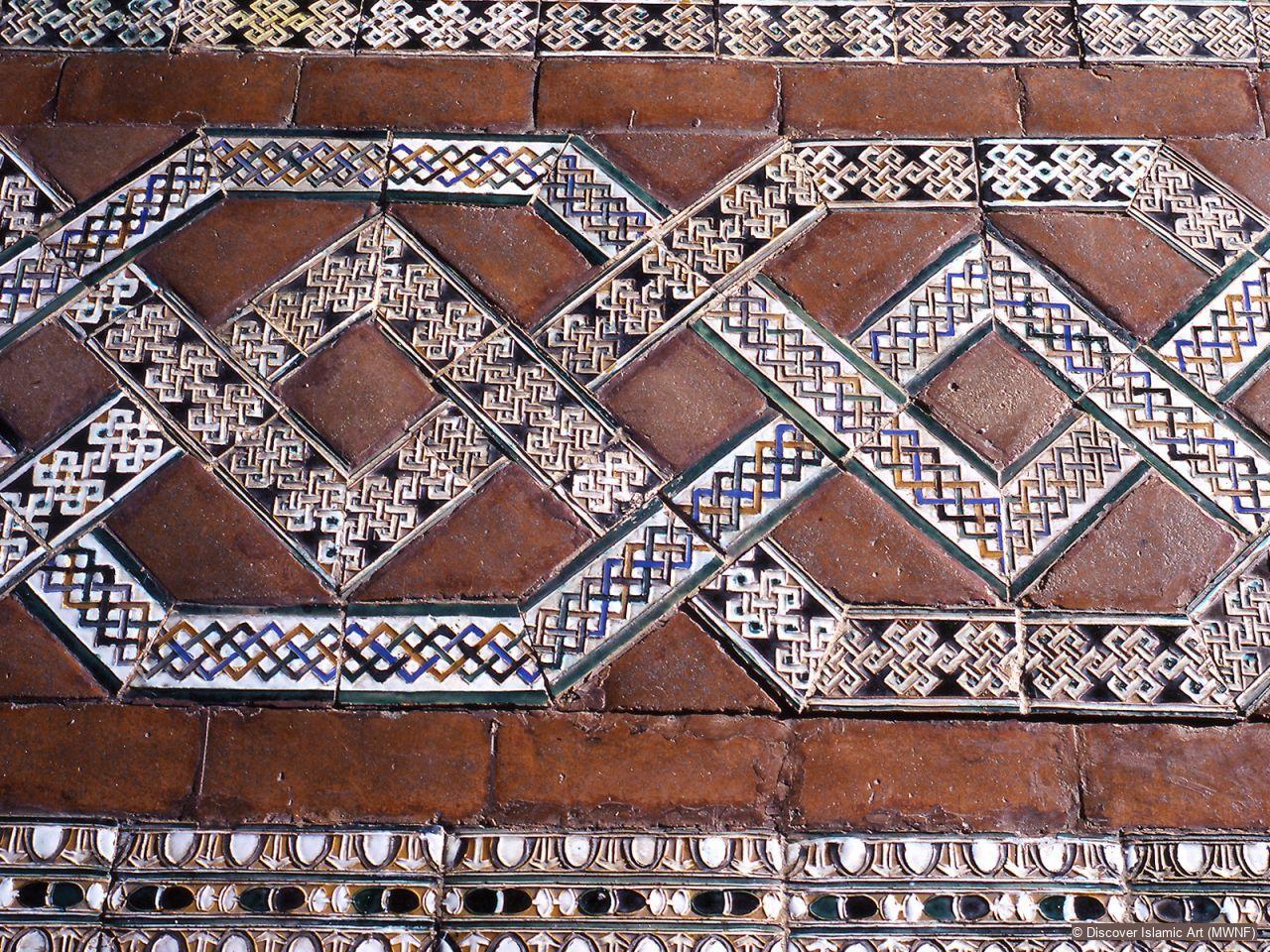
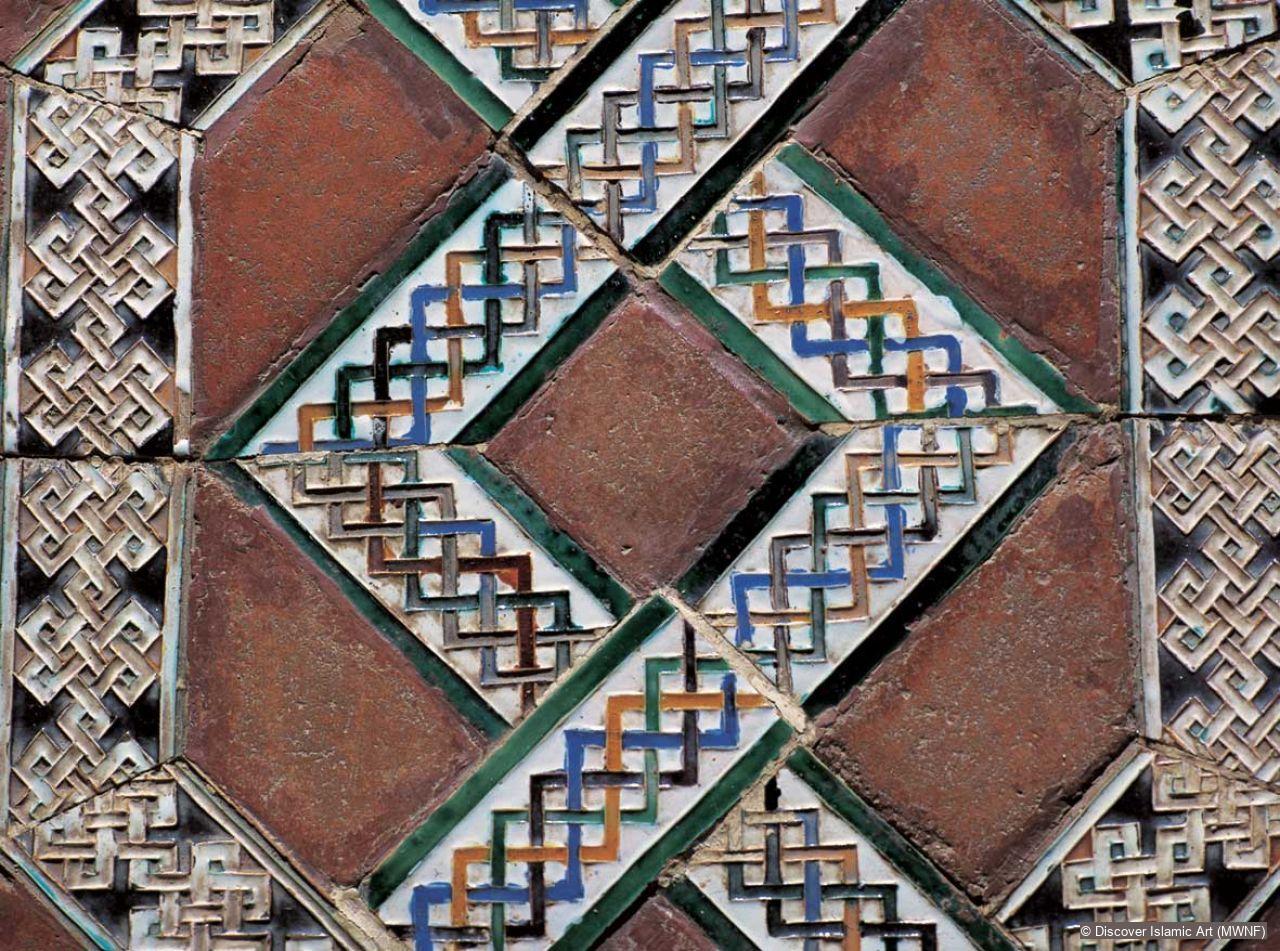
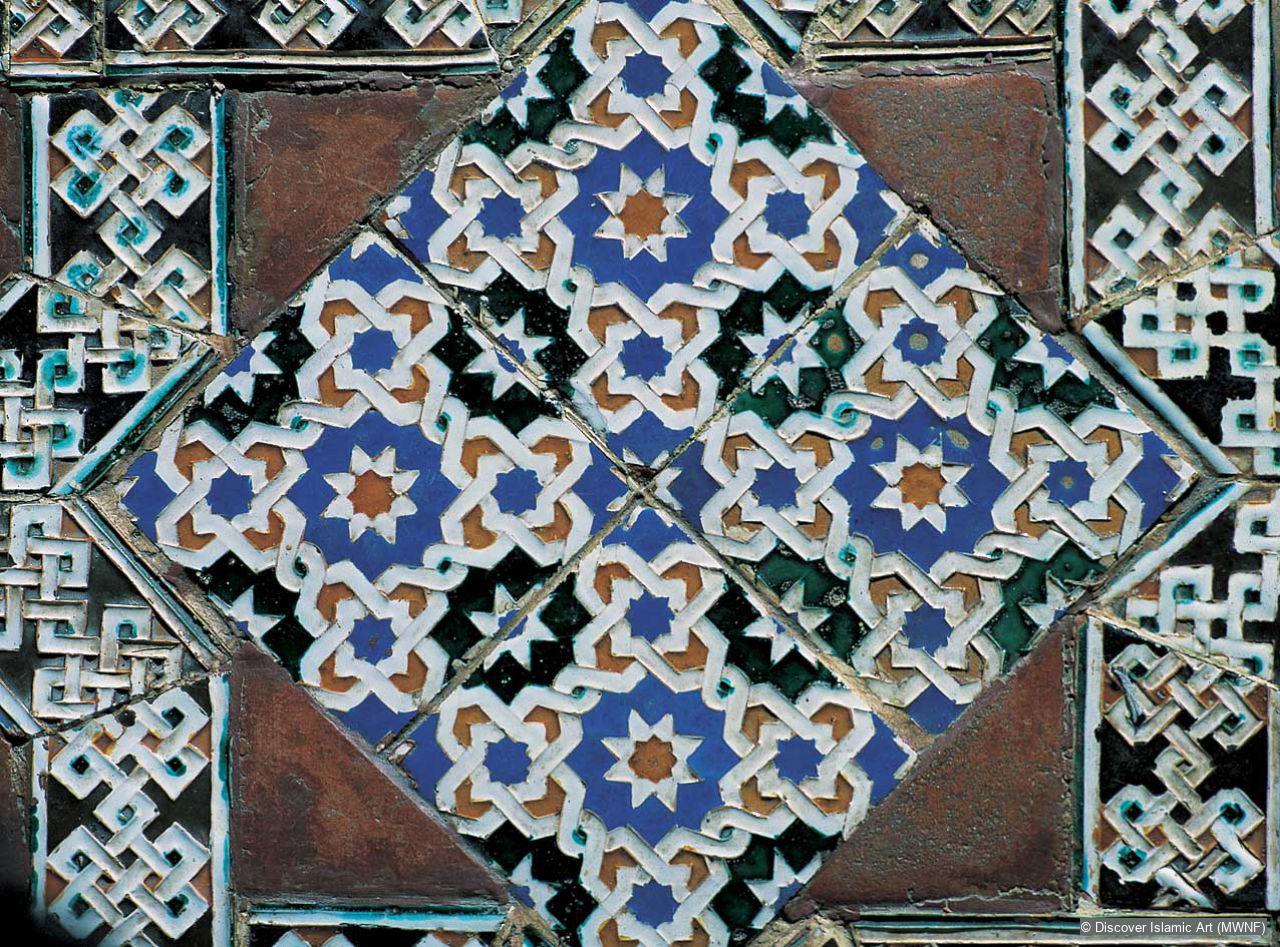
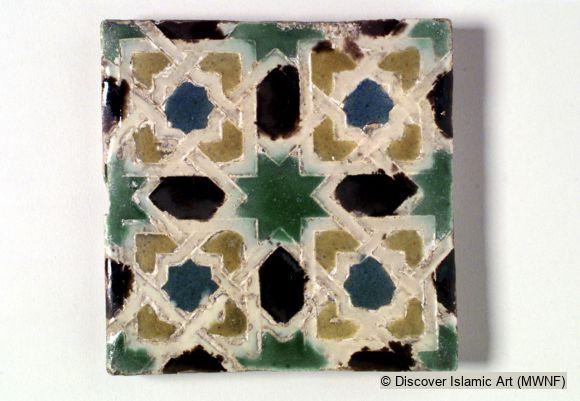
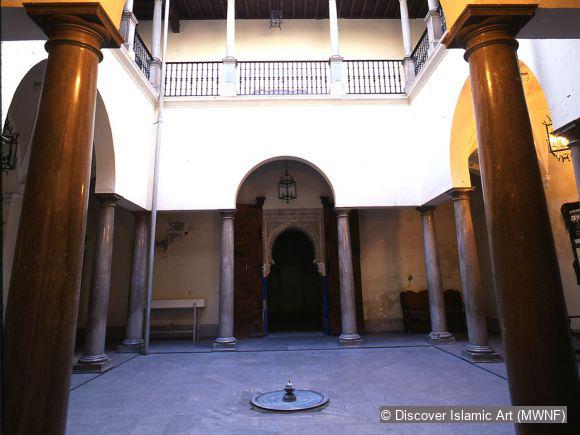
The University of Alcalá de Henares was the most important establishment founded by Cardinal Cisneros, an influential political figure at the time of the Catholic Kings. It has two interior spaces that combine Mudéjar plasterwork with Gothic and Renaissance themes. One of these is the auditorium, used for academic ceremonies, with its remarkable six-pointed interlacing work decorated with reds, blues and golds. The floors and seating areas are decorated with ceramics. The other such space is the Chapel of San Ildefonso, also in Alcalá, with its octagonal roof.
How Monument was dated:
Documentation relating to Cardinal Cisneros.
Selected bibliography:
Cabello y Lapiedra, X., “La Universidad de Alcalá”, La Esfera, 388, 1921, no page numbering.
Castillo Oreja, M. á., “La Proyección del Arte Islámico en la Arquitectura de Nuestro Primer Renacimiento: El 'Estilo Cisneros'”, Anales del Instituto de Estudios Madrileños, 22, Madrid, 1985, pp.55–63.
Castillo Oreja, M. á., “La Universidad de Alcalá en las Empresas de Cisneros”, in La Universidad Complutense y las Artes: VII Centenario de la Universidad Complutense, Madrid, 1995, pp.27–40.
López Guzmán, R., Arquitectura Mudéjar: Del Sincretismo Medieval a las Alternativas Hispanoamericanas, Madrid, 2000, p.359.
Toajas Roger, á., “En Torno al Llamado 'Estilo Cisneros': La Techumbre del Paraninfo de Alcalá de Henares” in La Universidad Complutense y las Artes, Madrid, 1995, pp.75-95.
Mudéjar Art: Islamic Aesthetics in Christian Art, p.79.
Citation of this web page:
Ángela Franco "University of Alcalá de Henares" in Discover Islamic Art, Museum With No Frontiers, 2026. 2026.
https://islamicart.museumwnf.org/database_item.php?id=monument;ISL;es;Mon01;34;en
Prepared by: Ángela FrancoÁngela Franco
Ángela Franco es Jefa del Departamento de Antigüedades Medievales en el Museo Arqueológico Nacional.
Obtuvo el Grado de Doctor por la Universidad Complutense de Madrid con la tesis Escultura gótica en León y provincia, premiada y publicada parcialmente (Madrid, 1976; reed. León, 1998); y la Diplomatura en Paleografía y Archivística por la Scuola Vaticana di Paleografia, Diplomatica e Archivistica, con la tesis L'Archivio paleografico italiano: indici dei manoscritti, publicada en castellano (Madrid, 1985). Becas de investigación: beca posdoctoral del Ministerio de Asuntos Exteriores, Academia Española de Bellas Artes de Roma (1974-75); beca posdoctoral del Ministerio de Educación y Ciencia, Academia Española de Bellas Artes de Roma (1975-77); beca de la Fundación Juan March de Madrid (1978).
Tiene en su haber 202 publicaciones, fundamentalmente sobre arte medieval cristiano, en especial la iconografía: Crucifijo gótico doloroso, Doble Credo, Danzas de la Muerte, temática bíblica en relación con la liturgia (el Génesis y el Éxodo en relación con la vigilia Pascual) o con el teatro (Secundum legem debet mori, sobre el “pozo de Moisés” de la cartuja de Dijon). Es autora de cuatro catálogos monográficos del Museo Arqueológico Nacional, entre ellos el de Dedales islámicos (Madrid, 1993), y de publicaciones sobre escultura gótica y pintura en la catedral de León y sobre escultura gótica en Ávila, así como de numerosas fichas para catálogos de exposiciones.
Ha participado en innumerables congresos nacionales e internacionales, presentando ponencias y mesas redondas, y ha dirigido cursos y ciclos de conferencias. Es Secretaria de Publicaciones en el Museo Arqueológico Nacional desde 1989.
Copyedited by: Rosalía AllerRosalía Aller
Rosalía Aller Maisonnave, licenciada en Letras (Universidad Católica del Uruguay), y en Filología Hispánica y magíster en Gestión Cultural de Música, Teatro y Danza (Universidad Complutense de Madrid), ha obtenido becas de la Agencia Española de Cooperación Internacional y la Universidad Nacional de Educación a Distancia de Madrid, así como el Diplôme de Langue Française (Alliance Française), el Certificate of Proficiency in English (University of Cambridge) y el Certificado Superior en inglés y francés (Escuela Oficial de Idiomas de Madrid). Profesora de Estética de la Poesía y Teoría Literaria en la Universidad Católica del Uruguay, actualmente es docente de Lengua Castellana y Literatura en institutos de Enseñanza Secundaria y formación del profesorado en Madrid. Desde 1983, ha realizado traducción y edición de textos en Automated Training Systems, Applied Learning International, Videobanco Formación y El Derecho Editores. Integra el equipo de Museo Sin Fronteras desde 1999 y ha colaborado en la revisión de los catálogos de “El Arte Islámico en el Mediterráneo”. Así mismo, ha realizado publicaciones sobre temas literarios y didácticos, ha dictado conferencias y ha participado en recitales poéticos.
Translation by: Laurence Nunny
Translation copyedited by: Monica Allen
MWNF Working Number: SP 38
RELATED CONTENT
Related objects
Related monuments
Islamic Dynasties / Period
On display in
Exhibition(s)
Download
As PDF (including images) As Word (text only)