

 Back
Back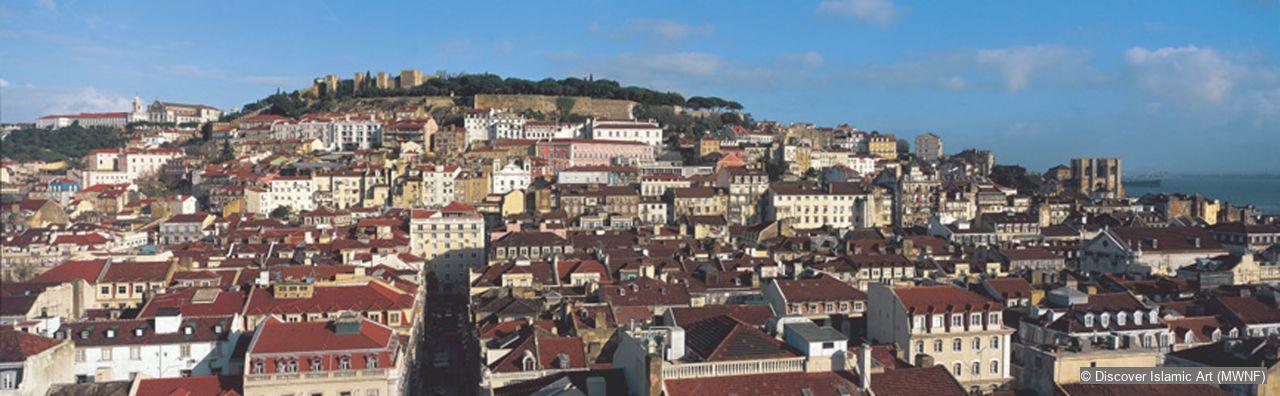
Name of Monument:
St George’s Castle
Location:
Lisbon, Portugal
Date of Monument:
2 BC–Hegira 8th / AD 14th century
Period / Dynasty:
Roman, Islamic, Medieval
History:
A defensive structure which protected, at least partially, the Roman fortified settlement or oppidum of Olisipo, elevated to the status of Roman town in 48 BC.
The Islamic Citadel and the Moorish Wall were rebuilt in the 4th / 10th century. The Citadel remained substantially intact until 663 / 1265 when Afonso III settled in Lisbon and undertook some maintenance work in it. The Royal Palace of the Castle, which was then built, began a process of decline in the 10th / 16th century which lasted three centuries. St George's Castle as a whole suffered major transformations from the 8th / 14th century to our own day, notably the restoration work of the upper castle carried out from 1938 to the present, but which did not, however, eliminate its basic Islamic form.
Description:
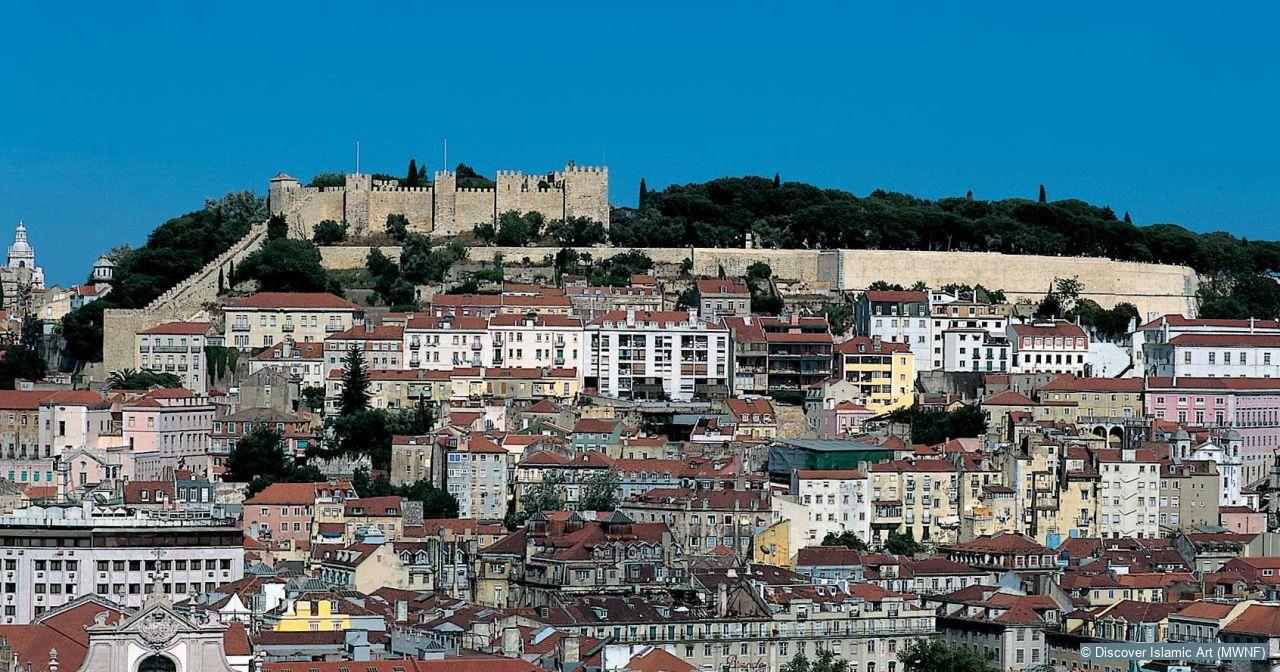
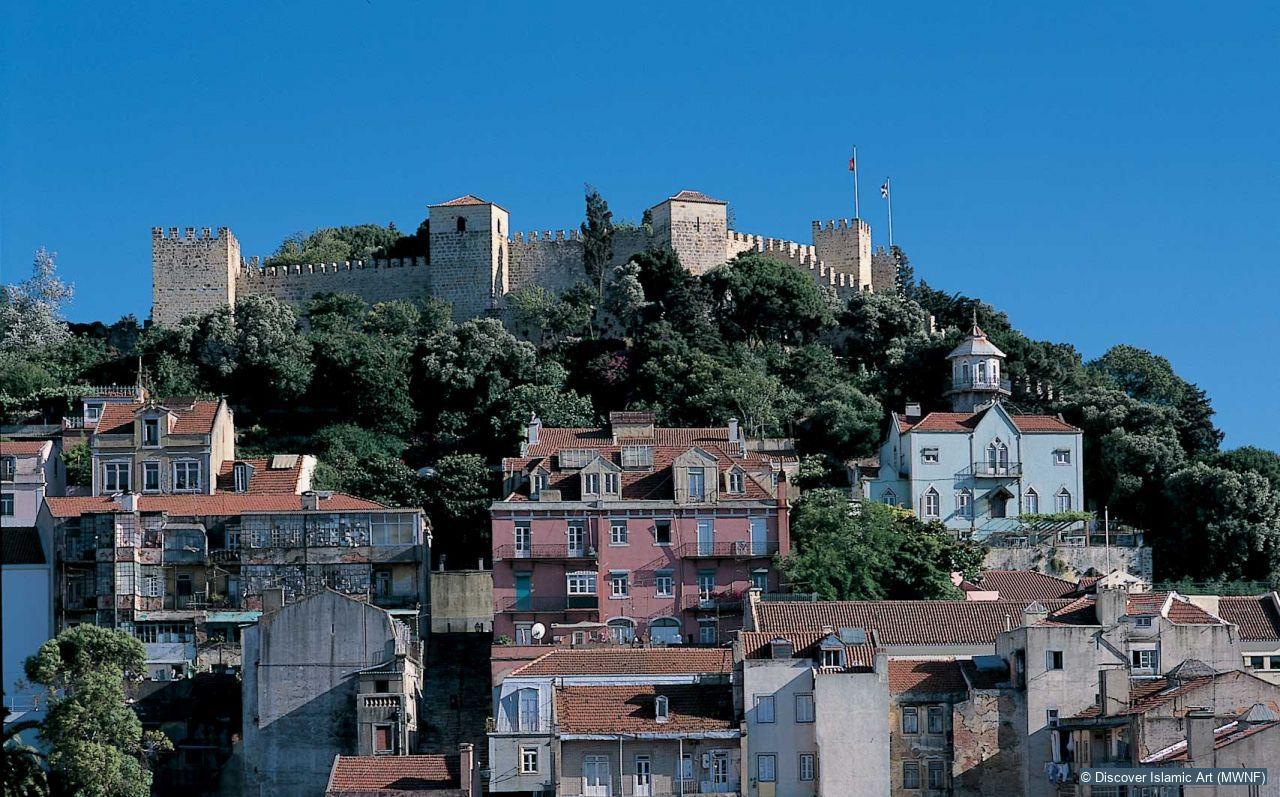
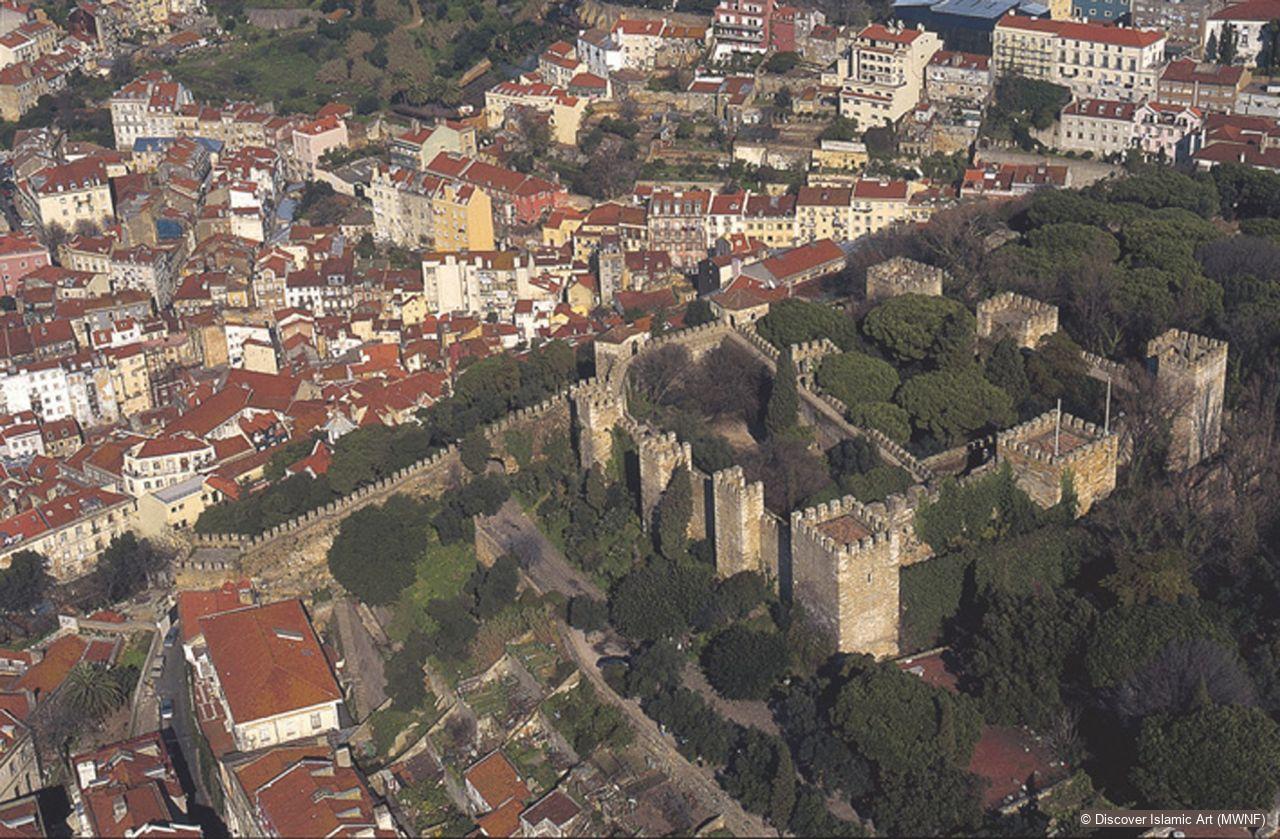
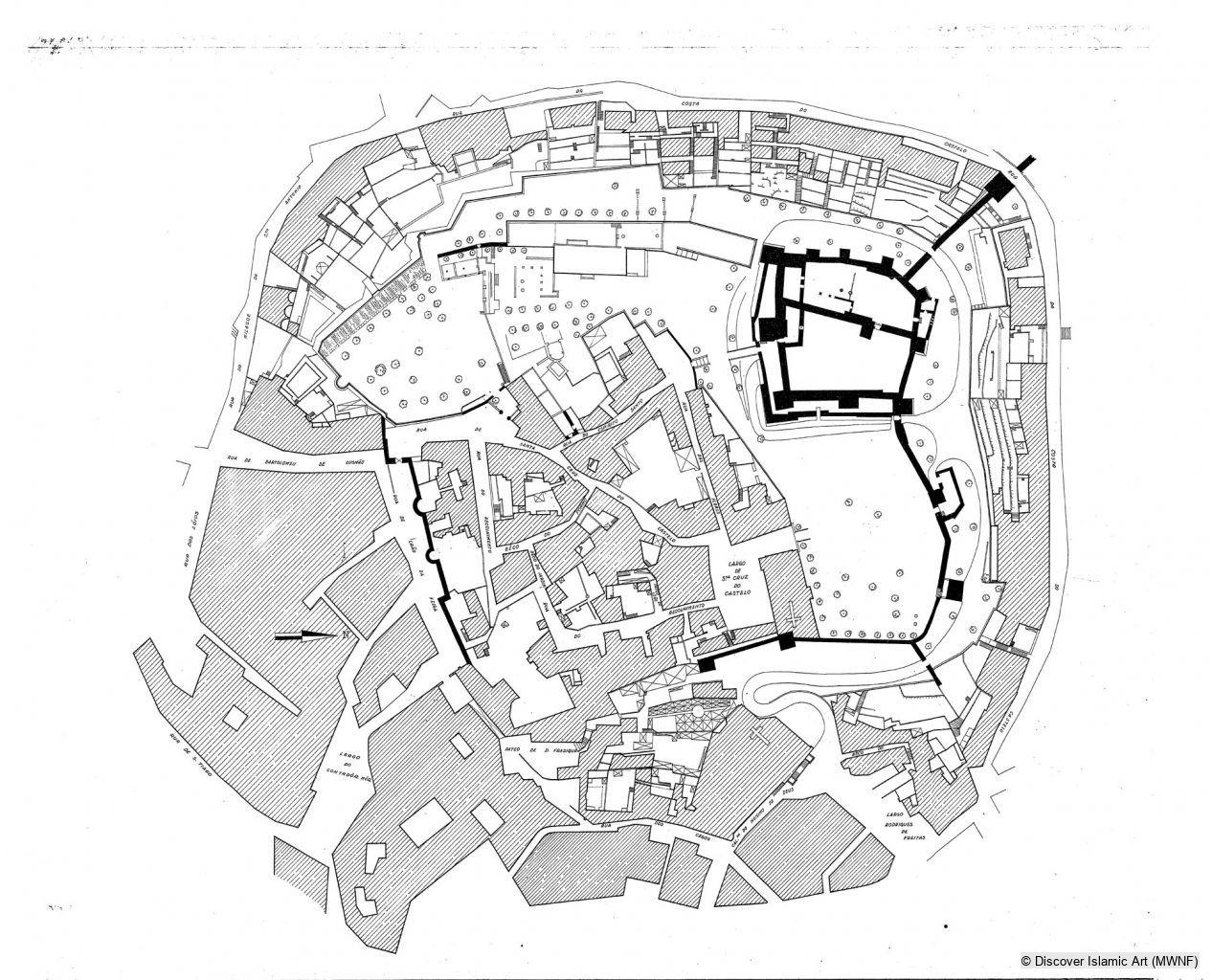
St George's Castle is the present-day name of an urban complex that includes the castle itself (the castelejo or upper castle), the surrounding Citadel and the Esplanade, a medieval military system entirely surrounded by defensive walls which crown the Colina do Castelo (Castle Hill) and extend into the historic centre of the City of Lisbon through the Cerca Moura or Moorish Wall. In a letter to Osberno, which recounts the conquest of Lisbon by the Crusaders in 1147 (AH 542), the author states that the Castle 'stands at the top of a rounded hill' and that 'the walls, descending in flights, come down to the banks of the Tagus'.
The Castle occupies the northwest corner of the fortified complex of the Citadel. It is an autonomous defensive structure with an almost square plan, consisting of two adjacent parade grounds linked to one another and divided in the middle by a wall joined to a central tower.
In addition to the upper castle the Citadel has two other areas: one which is today occupied by the Santa Cruz district and the Esplanade. The Santa Cruz district is bordered to the north, east and south by the wall of the Citadel. Six towers, not all of them now visible, were built into the eastern walls, and on the south face are two semi-circular turrets (apparently caliphal in style) on the Chão de Feira (marketplace). To the north there is an old, originally Islamic gate, the Porta do Moniz, which leads to the Praça Nova (New Square) where archaeological excavations have recently brought to light an Islamic district behind a military mosque converted by the Christians into the Church of Santa Cruz.
The Esplanade, to the south of the upper castle, shows vestiges of the original Islamic citadel and of the 'Royal Palace of the Castle' which succeeded it. Today this is occupied by an archaeological park where monumental vestiges of the Palace stand alongside architectural elements brought from other locations in the city of Lisbon. This Moorish citadel was the residence of the Islamic governor, and also housed the administration of the cora or Province of Lisbon, a secretariat for correspondence with Córdoba and the tax and military recruitment offices.
The Moorish Wall is an extension of the Castle. It has another seven sections of wall visible to the public and 13 towers or turrets. In some of the sections of its walls, namely in the wall supporting the Chapel of Santa Luzia at the Portas do Sol, there are vestiges of Islamic work. There the wall was partially reconstructed with rectangular ashlar stone placed lengthwise and crosswise in the caliphal style. Some of the gateways in the wall mentioned by travellers during the Islamic period are in use or are spatially identifiable even today: the Porta do Ferro, next to the present Church of Santo António, the Porta de Alfofa (or Porta do Postigo – wicket gate) in the western wall next to the Castle, the Porta do Mar, next to the Tagus, today called Arco Escuro on the Rua dos Bacalhoeiros, the Al Hama gate (baths gate) giving access to the old suburban district of Alfama, the Porta do Almocávar (cemetery gate) in what is now the Largo das Portas do Sol next to the belvedere of Santa Luzia.
St George’s Castle is the name currently given to the urban complex that includes the castle itself (known as the castelejo), the surrounding citadel and the esplanade, a military system that dates back to medieval times, the whole of which is surrounded by defensive walls on top of the castle hill. This defensive system extends to Lisbon’s historic centre by means of the Moorish wall.
Remains of the Islamic fortifications can be seen in the east wall of the citadel, beside the Menino Deus church, and in the supporting wall of the Chapel of Santa Luzia at Portas do Sol.
How Monument was dated:
The Moorish Wall was probably built in the AD 4th century, in the Late Roman period, coinciding with the demolition of the Roman theatre and privatisation of the Roman road built in the cloisters of the cathedral. Examination of the wall shows that it was rebuilt in the Islamic period and is today at least partially Moorish.
It has been dated on the basis of comparison of its stylistic and architectural elements, as well as through the use of old plans which confirm the layout of the walls.
Selected bibliography:
Araújo, N., Inventário de Lisboa, Lisbon, 1944.
Coelho, A. B., “O Domínio Germânico e Muçulmano”, Livro de Lisboa, Lisbon, 1994, pp.75–88.
Gaspar, A., “Resultados Preliminares das Escavações Arqueológicas no Castelo de S. Jorge”, Arqueologia Medieval, 7, Porto, 2001, pp.95–102.
Silva V., “O Castelo de S. Jorge”, Boletim da Direcção Geral dos Edifícios e Monumentos Nacionais, 25–6, Lisbon, 1961.
Silva, V., A Cerca Moura de Lisboa, Lisbon, 1939.
Citation of this web page:
José Luís de Matos "St George’s Castle" in Discover Islamic Art, Museum With No Frontiers, 2026. 2026.
https://islamicart.museumwnf.org/database_item.php?id=monument;ISL;pt;Mon01;3;en
MWNF Working Number: PT C
RELATED CONTENT
See also
Virtual Visit Exhibition Trail
In the Lands of the Enchanted Moorish Maiden. Islamic Art in Portugal
Download
As PDF (including images) As Word (text only)