

 Back
Back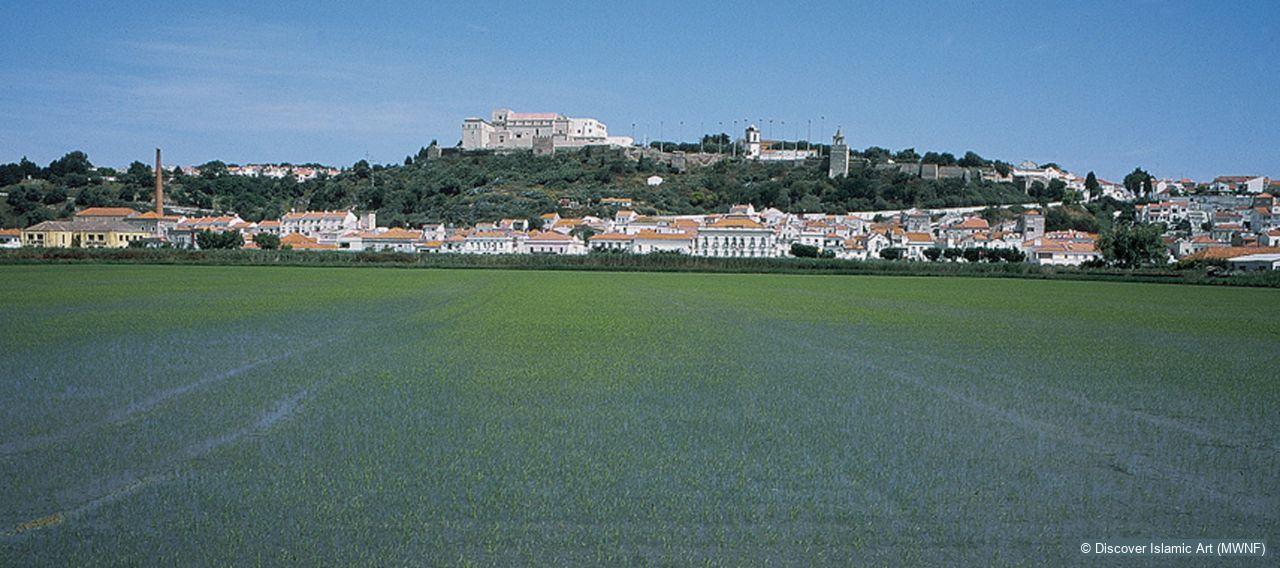
Name of Monument:
Castle of Alcácer do Sal
Location:
Alcácer do Sal, Setúbal, Portugal
Date of Monument:
Hegira 3rd/4th–7th / AD 9th/10th–13th century
Period / Dynasty:
Umayyad of al-Andalus, early Taifa, Almoravid, second Taifa period, Almohad
Description:
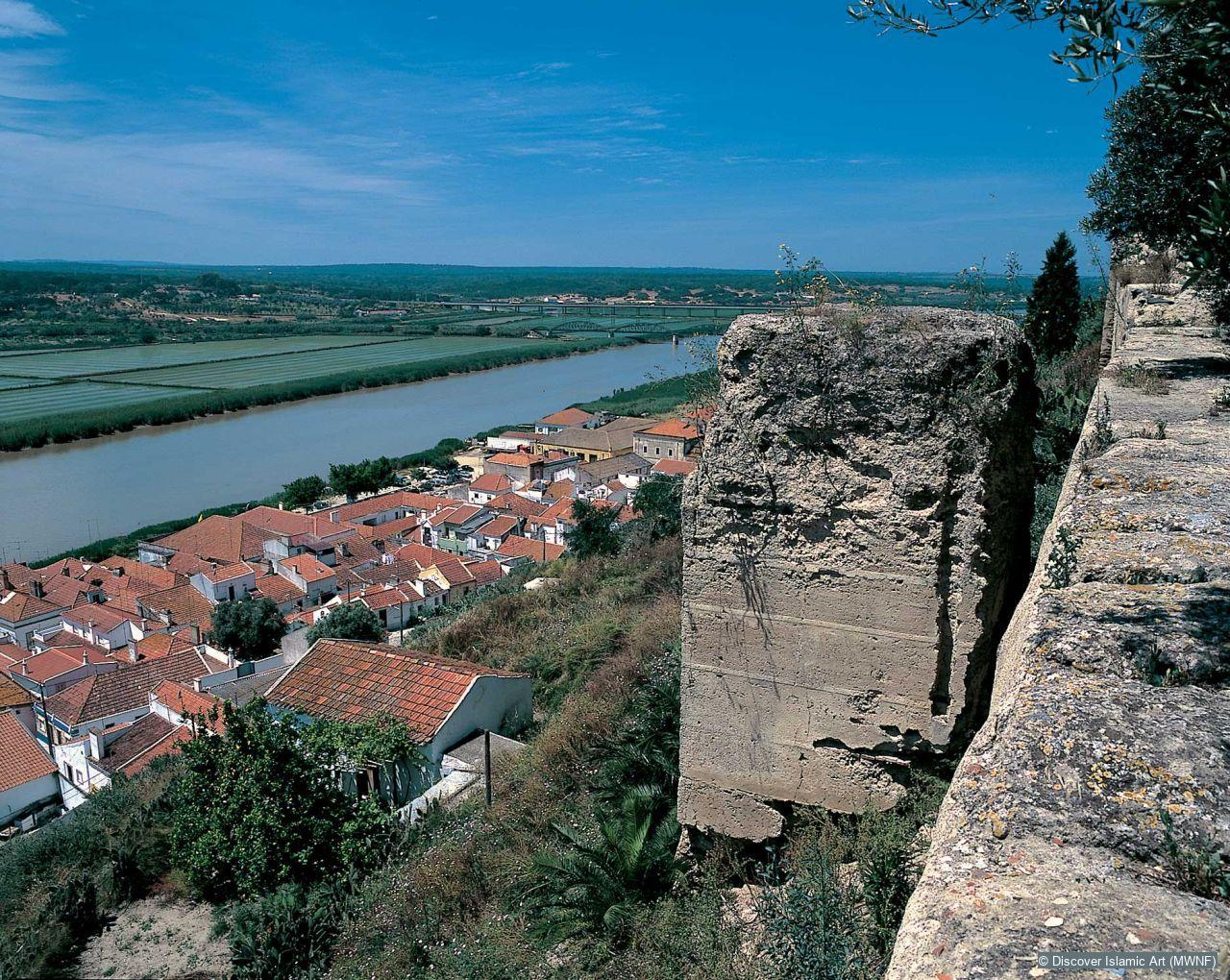
The castle is an elongated irregular polygon in shape, built around a small hill which rises to 62 metres. The River Sado runs close to the foot of the hill, navigable between the bay of Setúbal and Porto Rei, a distance of nearly 40 km.
Successive restorations and a certain amount of urban development have led to changes in some places, resulting in some demolition and this has concealed the original techniques of construction.
It is probable that this was originally a ribat (fortified Muslim hermitage) but it was with the settlement of the Banu Danis Berbers at the beginning of the AH 4th / AD 10th century, that major construction work on the fortress and town began. Under the rule of Abd al-Rahman III, Alcácer became a district capital and naval shipyard, revealing its close links with the Atlantic. In the AH 5th / AD 11th century it maintained its military pre-eminence, being referred to in Arab sources as the iqlim (rural district) of al-Qasr, a vast region for which this castle was the principal stronghold. Two stelae with epigraphs in kufic script, found at the foot of the hill on which the castle stands, date from this period.
It is possible that the citadel at the western end originally had a square plan, reusing Roman constructions. In the northwest tower of the citadel, remains were recorded of a horseshoe arch and, in the same area, decorative bonded ashlar masonry. A gate located to the west linked the palatine area to the outside of the walls. The fortress had two other gates: the Porta Nova in the north and the Porta de Ferro in the east, which gave access to the outer town and the port area.
Recognising its strategic and military importance, the Almohads decided to establish their headquarters here, defining the mouth of the River Sado as a frontier line with the Christian territories of the Setúbal peninsula. A bold construction programme was initiated with the aim of rendering it as invulnerable as possible in the face of potential Portuguese attacks. The dimension of the fortified group of buildings reached some 3.6 hectares, built in an offset line following the topography of the hill. Some technical innovations were introduced, namely the use of tabiyya (walls of compressed mud and stones) and the building of an octagonal tower at the northeast of the wall, vestiges of which remain. The walled perimeter is reinforced by a large number of towers, a barbican, a ditch and, according to recent archaeological reports, an outer defensive wall. Of the two towers of the south curtain wall, one is conserved, built of tabiyya. Christian accounts of the conquest of Alcácer in AH 614 / AD 1217, recognise the fortress as one of the strongest of the Islamic South. In 18th-century sources nearly 30 towers are referred to, 12 of which can be identified today.
In the excavations carried out in the citadel from 1993 onwards, structures were uncovered and materials unearthed which have allowed archaeologists to confirm the hypotheses of how the spatial organisation of the complex developed. The ceramics found date from between the AH 2nd and 7th / AD 8th and 13th centuries, with the Almohad group of objects offering greater diversity of form and decoration.
The Castle of Alcácer do Sal is an elongated irregular polygon built around a small hill. Although it was significant in the history of Gharb al-Andalus, it was during the Almohad era that the fortress played its most important role. The fortified area covered around 3.6 hectares and followed the shape of the hill. Some remains of the mud wall have survived: an octagonal tower in the northeast corner and a flanking tower on the south wall. Christian conquest accounts from AH 617 / AD 1217 mention the fortress as one of the strongest in the Islamic South.
How Monument was dated:
Written sources (Ibn Hayyan) confirm the presence of Mas'ud bin Abi Danis at the head of Alcácer in 303 / 915. For subsequent periods, other Muslim and Christian authors provide information on the population and their territory. In addition to these references, the archaeological data helps confirm the Islamic presence inside the walls from the period of the Emirs to the Almohad period. The archaeological materials and building techniques used for the walls and towers support the suggested chronological framework.
Selected bibliography:
Carvalho, A., Faria, J. and Ferreira, M., Alcácer do Sal Islâmica: Arqueologia e História de uma Medina do Garb Al-Andalus (Séculos VIII–XIII), Alcácer do Sal, 2004.
Chagas, J. A., “O Castelo de Alcácer do Sal e a Utilização da Taipa Militar Durante o Domínio Almóada”, Master's dissertation presented at the University of évora, 1995.
Fernandes, I. and Picard, C., “La Défense Côtière à l'époque Musulmane: l'Exemple de la Presqu'île de Setúbal”, Archéologie Islamique, 8, 1999, pp.67–94.
Paixão, A., Faria, J. and Carvalho, A., “Aspectos da Presença Almoade em Alcácer do Sal (Portugal)”, in Mil Anos de Fortificações na Península Ibérica e no Magreb (500–1500): Simpósio Internacional sobre Castelos, ed. I. Fernandes, Palmela, 2000, pp.369–83.
Paixão, A., Faria, J. and Carvalho, A., “O Castelo de Alcácer do Sal: um Projecto de Arqueologia Urbana”, Bracara Augusta, Vol. XLV, 97 (110), 1994, pp.215–64.
Citation of this web page:
Isabel Cristina Ferreira Fernandes "Castle of Alcácer do Sal" in Discover Islamic Art, Museum With No Frontiers, 2026. 2026.
https://islamicart.museumwnf.org/database_item.php?id=monument;ISL;pt;Mon01;34;en
MWNF Working Number: PT NN
RELATED CONTENT
Islamic Dynasties / Period
See also
Virtual Visit Exhibition Trail
In the Lands of the Enchanted Moorish Maiden. Islamic Art in Portugal
Download
As PDF (including images) As Word (text only)