

 Back
Back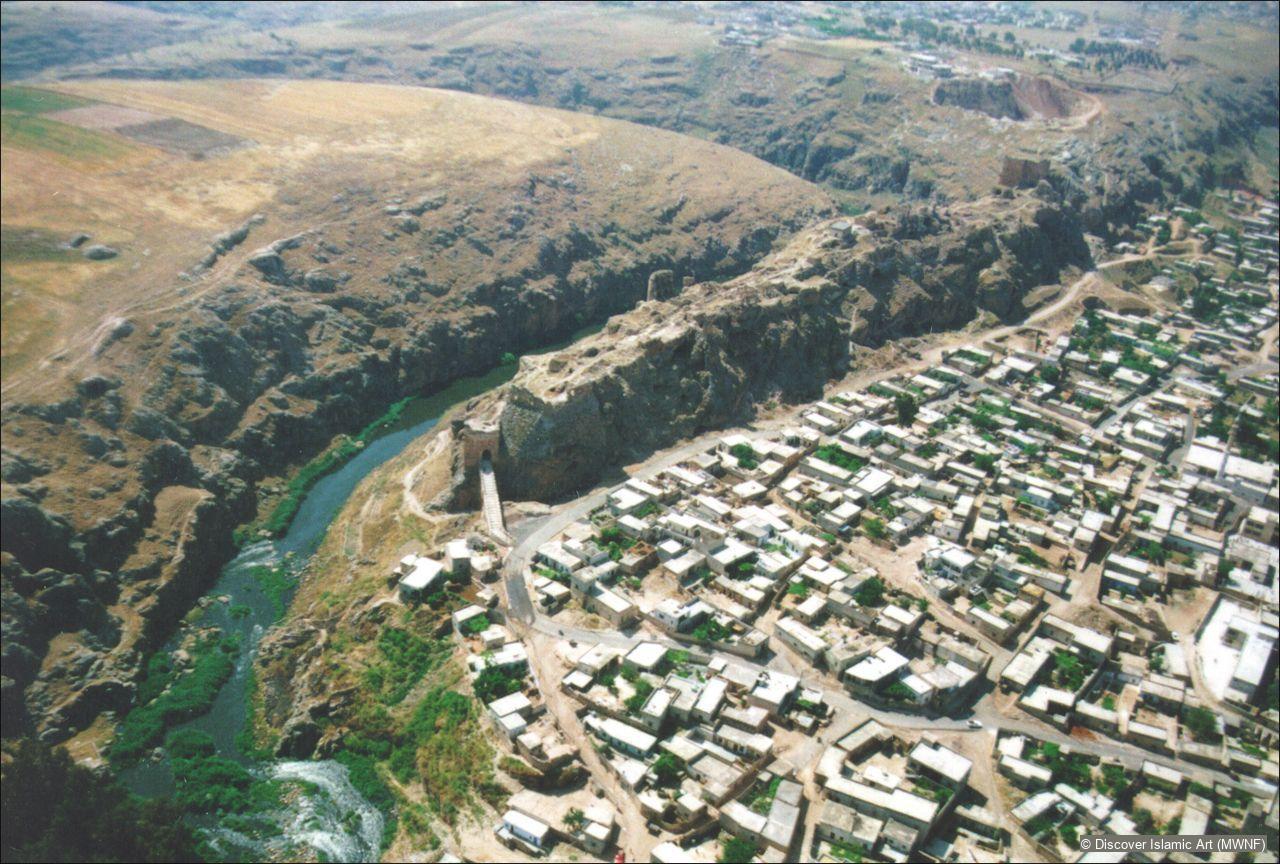
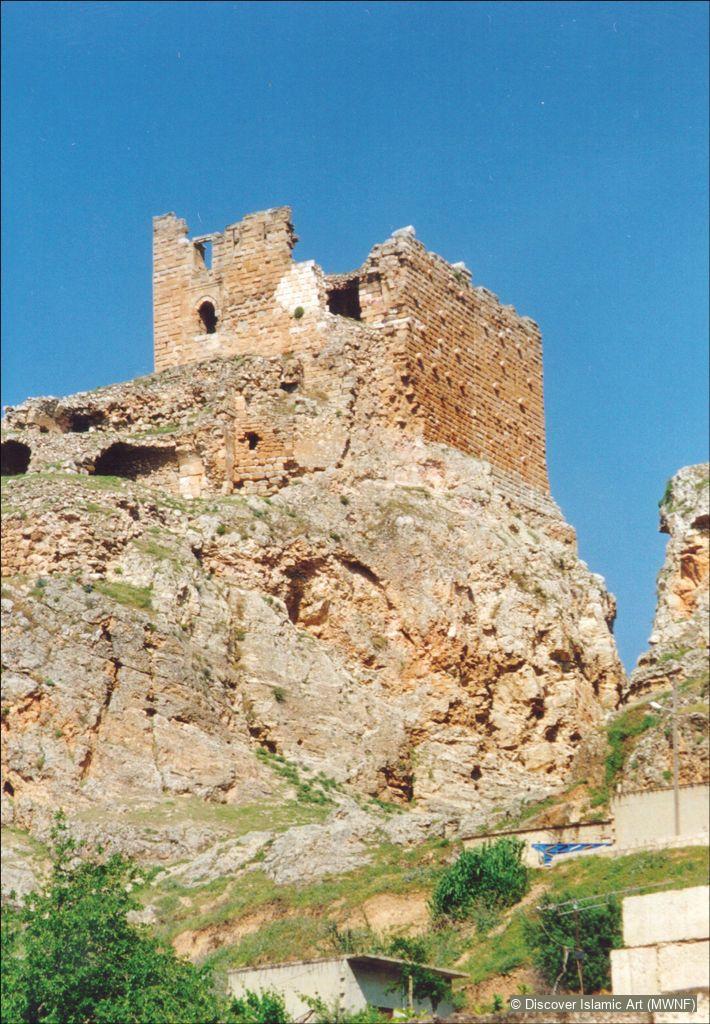
Name of Monument:
Qal’a Shayzar
Also known as:
Shayzar Fortress
Location:
25 km west of Hama, Hama region, Syria
Date of Monument:
Hegira 4th–7th century / AD 10th–13th century
Period / Dynasty:
Byzantine, Fatimid, Banu Munqidh, Seljuq, Ayyubid, Mamluk
Patron(s):
Atabeg Nur al-Din (AH 552 / AD 1157; AH 565/ AD 1170); Ayyubid prince of Aleppo al-‘Aziz Abu l-Muzaffar Muhammad (AH 626 / AD 1229; AH 630 / AD 1233); Mamluk Sultans Baybars (AH 659 / AD 1261) and Qalawun (AH 689 / AD 1290).
Description:
Occupied since Antiquity, notably by the Seleucids (Larissa), by the Romans (Caesara) and by the Byzantines (Sezer), Shayzar may have known its first Islamic fortification programme in the second half of the AH 5th / AD 10th century when it was being contested by the Byzantines and the Fatimids. The early castle (qasr) was finally taken over in AH 474 / AD 1081 by the local tribe of Banu Munqidh – the same tribe from which the memoirs of the Arab knight Usama bin Munqidh (d. AH 584 / AD1188), have survived. Shayzar remained in the tribe's hands during the first half of the AH 6th / AD 12th century, and was used as a seigneurial residence and as a military position controlling a bridge that crossed the Orontes River, an important physical frontier between the Latin States and the Muslim provinces.
The earthquake that struck the region in AH 552 / AD 1157 decimated the site, at which point the Seljuq Atabeg Nur al-Din Mahmud bin Zangi supervised a major restoration and fortification program, which he renewed following another earthquake in AH 565 / AD 1170. After Nur al-Din died in AH 569 / AD 1174, Qasr Shayzar was integrated into the Ayyubid empire and granted as an iqta'','en');" style="text-decoration: underline;">iqta' (property donation). Its defences were progressively improved during the first half of the AH 7th / AD 13th century, although its role decreased with the recession of the eastern borders of the Latin states following the Mongol invasion. The site was restored by the Mamluk Sultan Baybars. After the advent of Sultan al-Mansur Qalawun in AH 678 / AD 1280, the anti-Sultan Sunqur al-Ashqar integrated the castle into his possessions and kept it until its final conquest by Qalawun in AH 682 / AD 1283. Shayzar was then transformed into a provincial town in the Mamluk province of Homs.
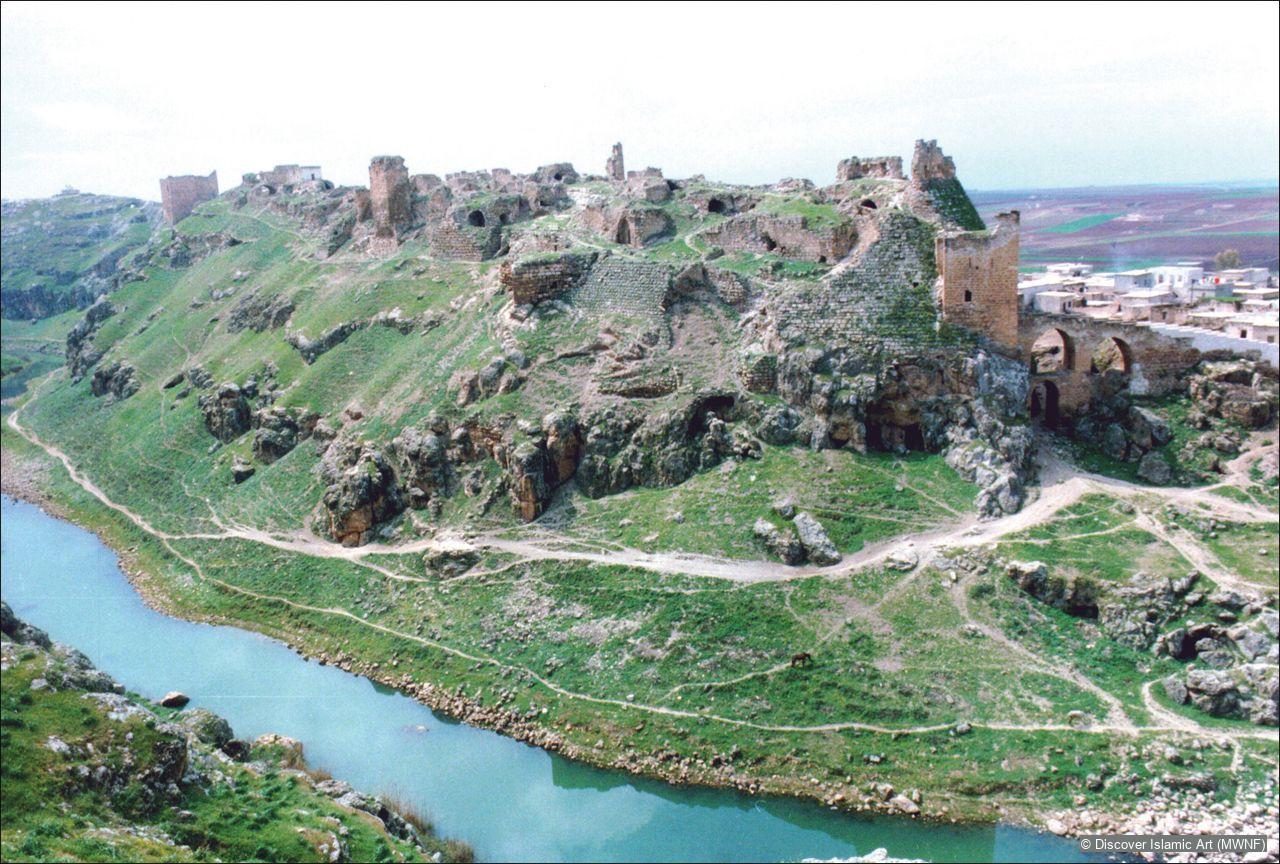
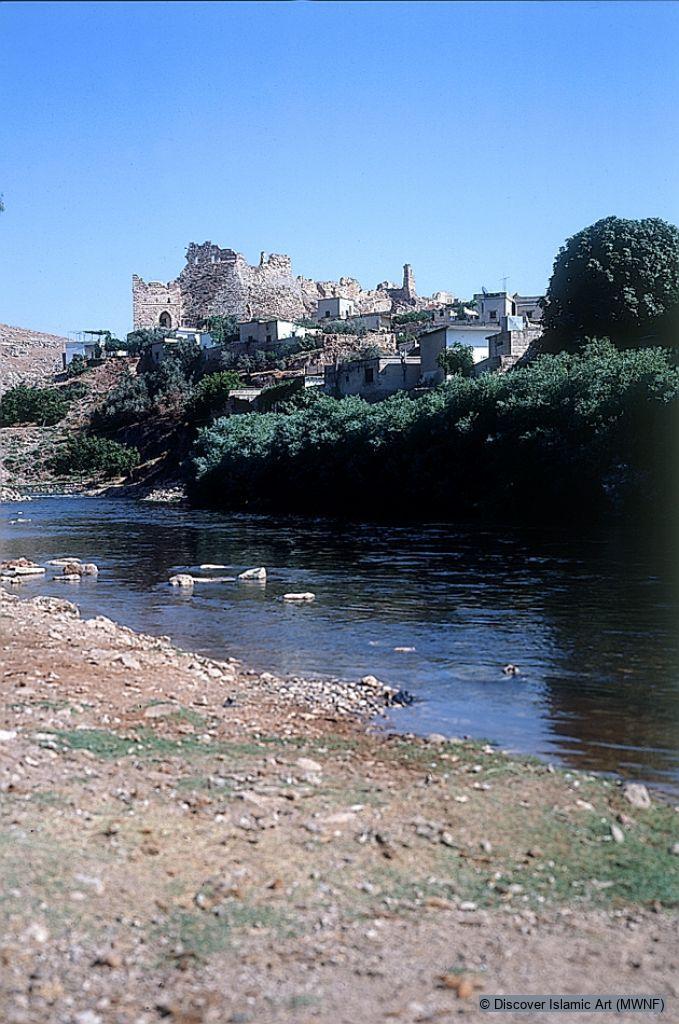
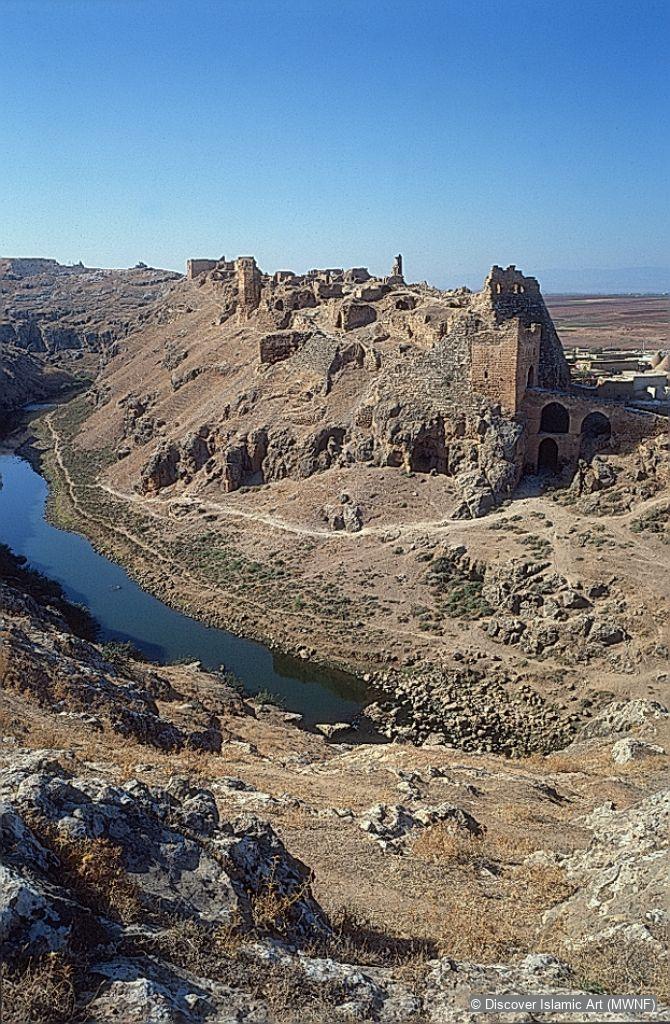
Located halfway between the Syrian towns of Hama and Afamya (Apamea), Qasr Shayzar spreads across a narrow cliff, approximately 500 m long and 50 m wide, orientated north–south and isolated from the southern plateau by a part-artificial moat. It overlooks the Orontes River.
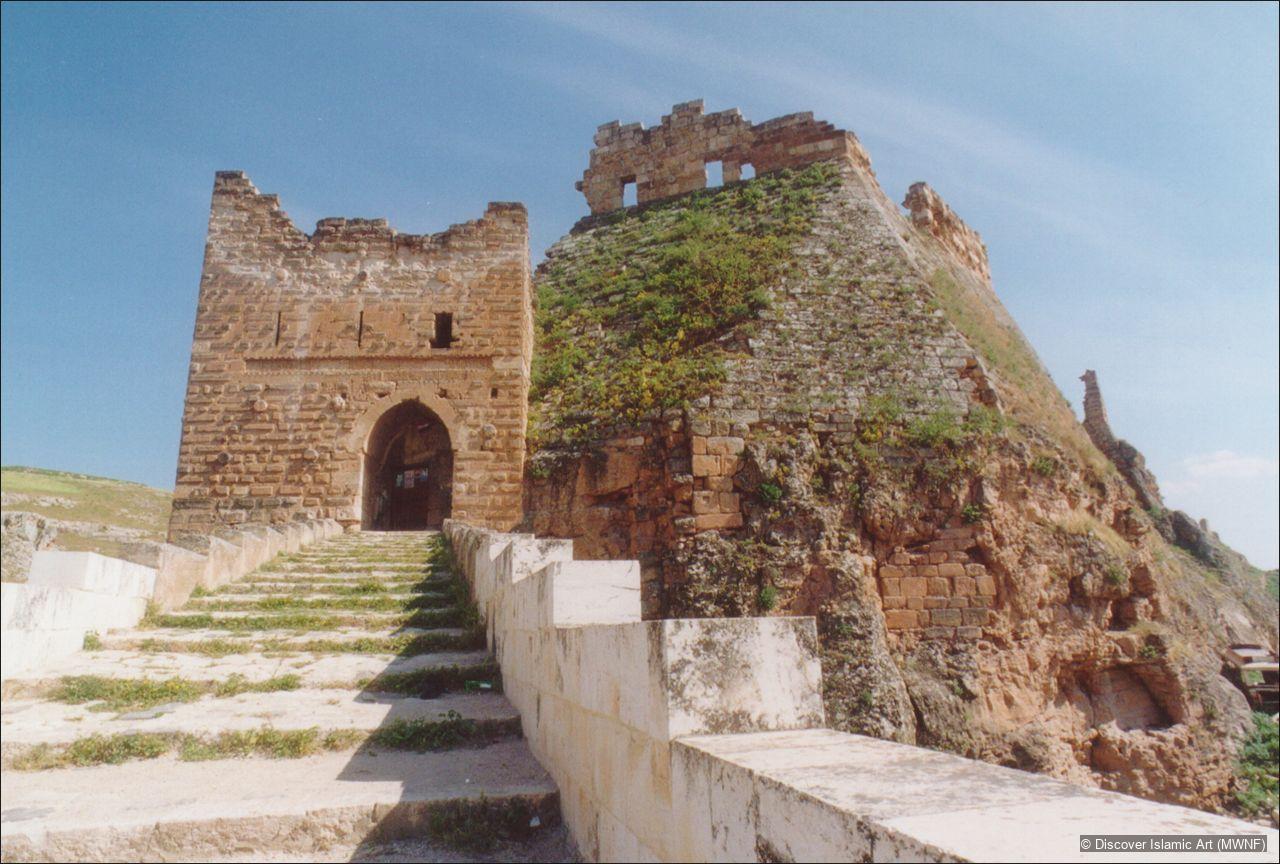
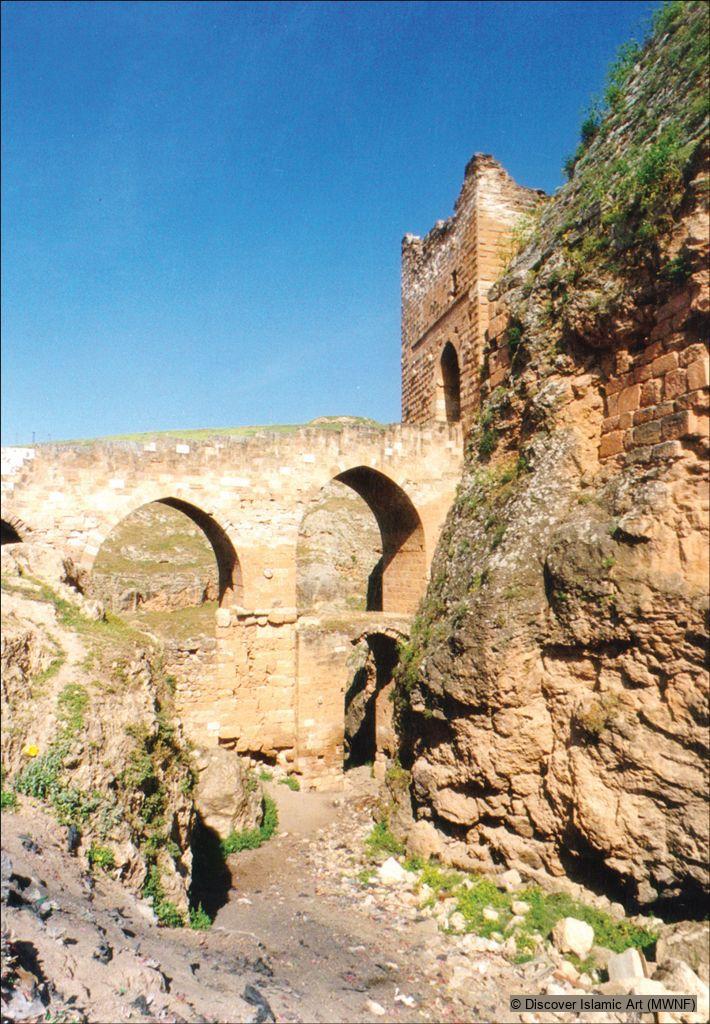
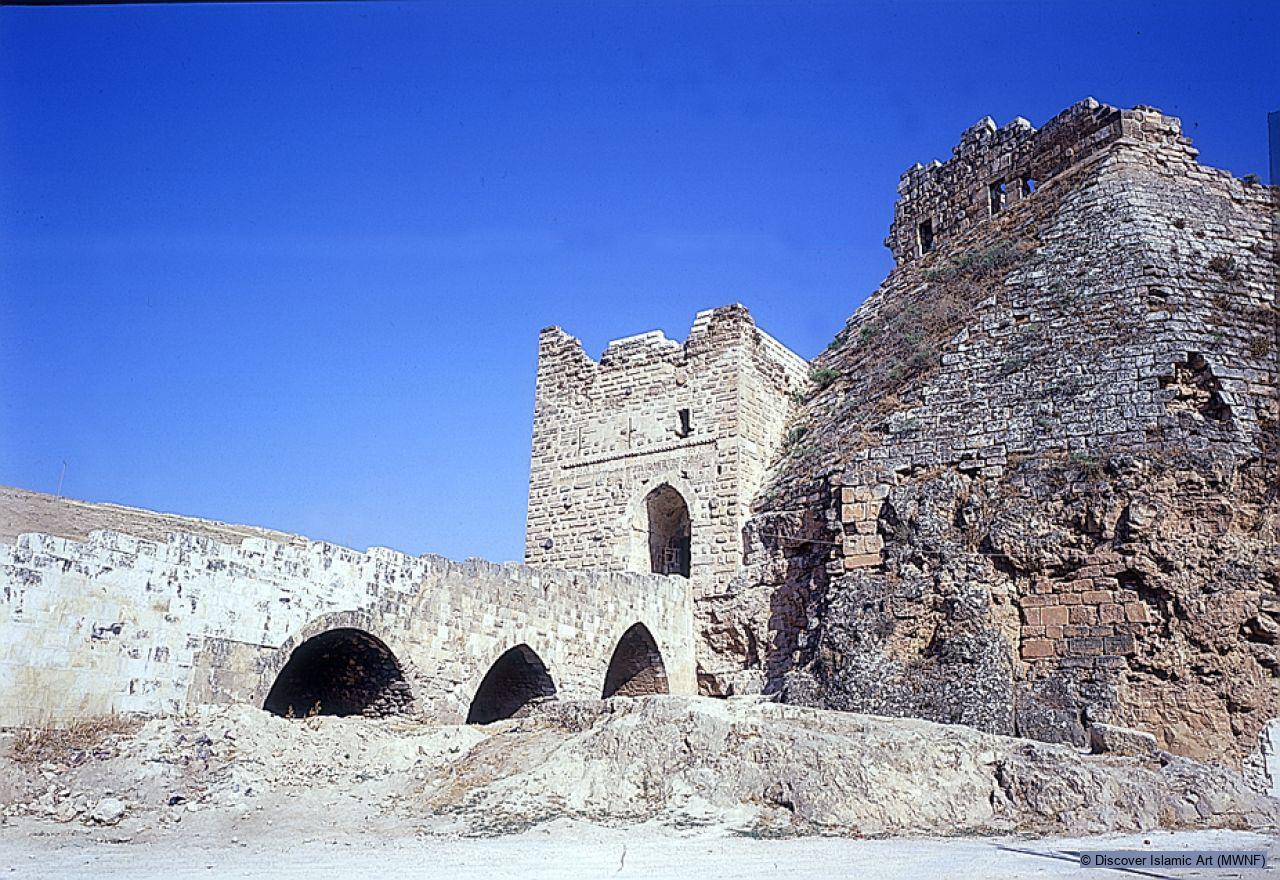
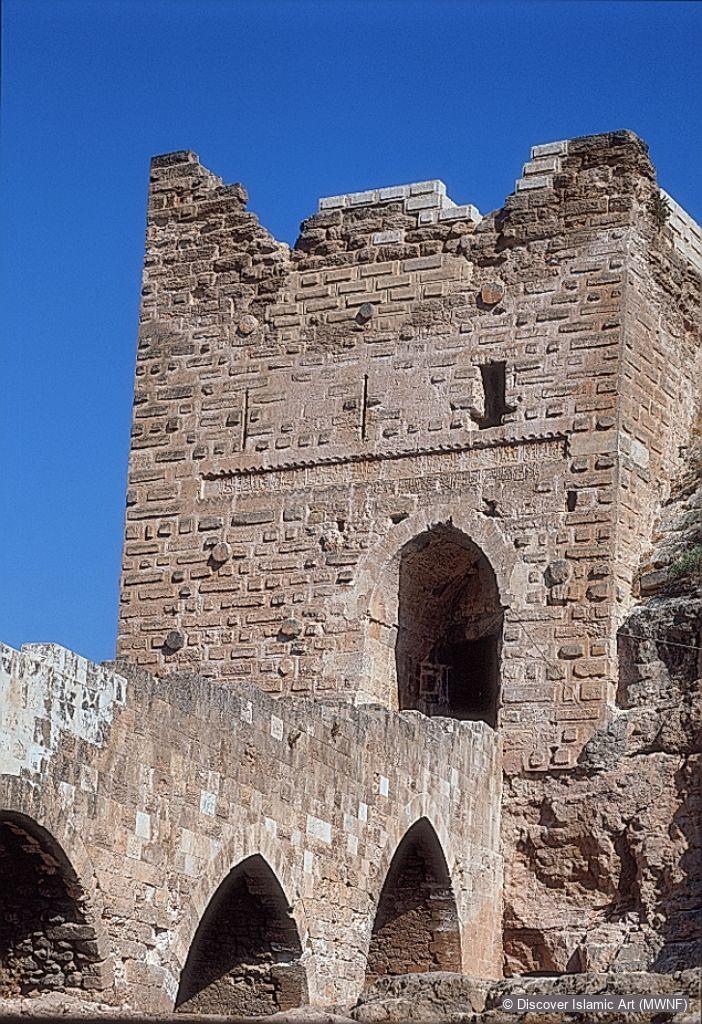
Today, much of the castle is ruined, with the exception of two main buildings. On the northern side of the cliff is the Mamluk square gate tower, built at the end of the AH 7th / AD 13th century, initially accessible through a footbridge and still defended by an “assommoir”. On the southern side, overhanging the moat there is the large square keep which reveals two main construction phases, both with palatial characteristics and an exhaustive fire cover through numerous loopholes under recesses. The western half of this building is attributed to the Ayyubid period, dated AH 630 / AD 1233 by an inscription. The eastern half may have been added during the Mamluk period. The rustic masonry type and transversally laid columns used for these two main buildings, as well as the flanking towers built on the western and eastern sides of the cliff, are typical features of Ayyubid and Mamluk fortification, thus emphasising the predominance of the AH 7th / AD 13th century construction phases in Qasr Shayzar.
During the Atabeg and Ayyubid rule in Syria, this citadel was occupied by the local Arab tribe of the Banu Munqidh. A member of this tribe, Usama bin Munqidh (d. AH 584 / AD 1188), was an important Arab knight and a member of Saladin's armies. His memoirs have survived, revealing interesting anecdotes of Muslim and Crusader interaction, both in a military context and on an everyday social level. As for the Citadel, twice restored by Nur al-Din Mahmud bin Zangi after earthquake damage and restored by the Mamluks after the Mongol invasions, most of what survives is from the latter period.
How Monument was dated:
The monument is dated by an inscription on the façade of the northern gate tower: 689 (1290); an inscription on the lower part of the access bridge: 626 (1229) and by another inscription on the north façade of the western Ayyubid keep: 630 (1233).
Selected bibliography:
Hashim, S., "Qal'at Shayzar [Shayzar Castle]", al-Mudiriyya al-'Amma li l-Athâr wa l-Matâhif [The General Directorate of Monuments and Museums], Damascus, 1963.
Mouton, J-M., “Shayzar”, Encyclopaedia of Islam, Leiden, 1997, Vol. IX, pp.410–11.
Tonghini, C., et al, “The Evolution of Masonry Technique in Islamic Military Architecture: the Evidence from Shayzar”, Levant, 35, 2003, pp.179–212.
Tonghini, C., Montevecchi N., “The Castle of Shayzar: The Results of Recent Archaeological Investigations”, in Faucherre N., et al, La Fortification au temps des Croisades, Rennes, 2004, pp.137–50.
Berchem van, M., and Edmond F., “Voyage en Syrie”, Vol. I, Mémoires de l'Institut Français d'Archéologie Orientale du Caire, Cairo, 1914–15, pp.177–88.
Citation of this web page:
Benjamin Michaudel "Qal’a Shayzar" in Discover Islamic Art, Museum With No Frontiers, 2026. 2026.
https://islamicart.museumwnf.org/database_item.php?id=monument;ISL;sy;Mon01;27;en
Prepared by: Benjamin MichaudelBenjamin Michaudel
Benjamin Michaudel is a French scholar in Islamic history, art and archaeology and an Arabist. He is the author of a Ph.D. on the Ayyubid and Mamluk fortifications in coastal Syria and has been conducting surveys in Syria since 1997.
Copyedited by: Mandi GomezMandi Gomez
Amanda Gomez is a freelance copy-editor and proofreader working in London. She studied Art History and Literature at Essex University (1986–89) and received her MA (Area Studies Africa: Art, Literature, African Thought) from SOAS in 1990. She worked as an editorial assistant for the independent publisher Bellew Publishing (1991–94) and studied at Bookhouse and the London College of Printing on day release. She was publications officer at the Museum of London until 2000 and then took a role at Art Books International, where she worked on projects for independent publishers and arts institutions that included MWNF’s English-language editions of the books series Islamic Art in the Mediterranean. She was part of the editorial team for further MWNF iterations: Discover Islamic Art in the Mediterranean Virtual Museum and the illustrated volume Discover Islamic Art in the Mediterranean.
True to its ethos of connecting people through the arts, MWNF has provided Amanda with valuable opportunities for discovery and learning, increased her editorial experience, and connected her with publishers and institutions all over the world. More recently, the projects she has worked on include MWNF’s Sharing History Virtual Museum and Exhibition series, Vitra Design Museum’s Victor Papanek and Objects of Desire, and Haus der Kulturen der Welt’s online publication 2 or 3 Tigers and its volume Race, Nation, Class.
MWNF Working Number: SY 34
RELATED CONTENT
Related objects
Related monuments

On display in
Exhibition(s)
Download
As PDF (including images) As Word (text only)