

 Back
Back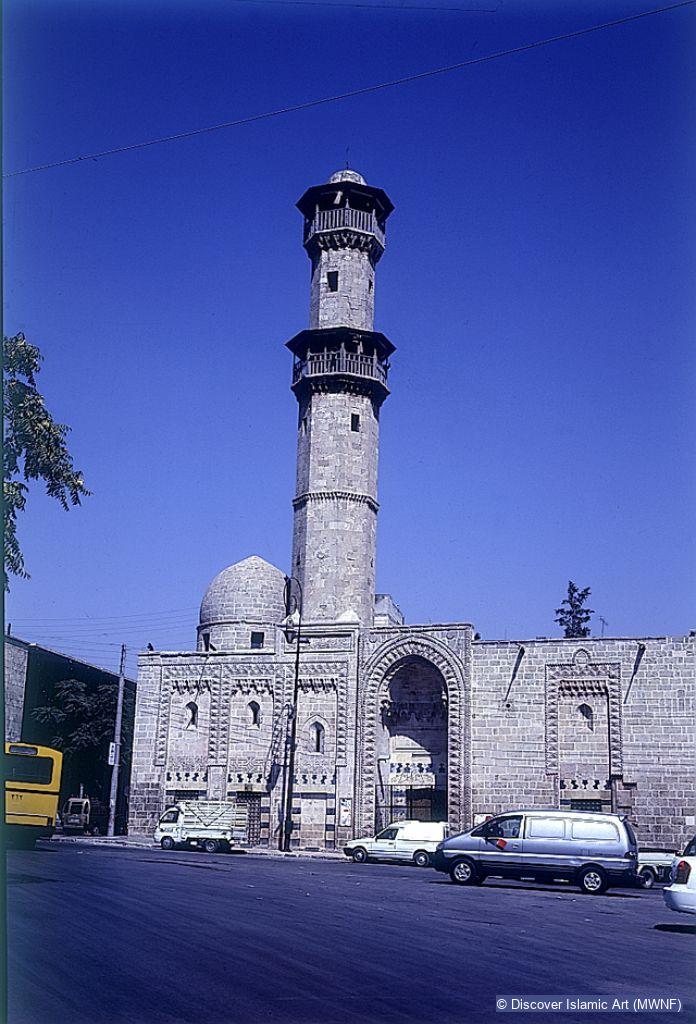
Name of Monument:
Utrush Mosque
Location:
Aleppo, Syria
Date of Monument:
Hegira 801–12 / AD 1399–1410
Architect(s) / master-builder(s):
Ahmad al-Kutubi was responsible for the architectural décor during the first phase of building. An inscription between two windows under the cupola of the mausoleum reads: “work of Jafar ibn Abi Ghanim”. The second phase of construction was supervised by Yusuf al-Ashrafi, as the inscription above the portal testifies.
Period / Dynasty:
Mamluk
Patron(s):
Aqbugha al-Utrush, Governor of Aleppo (r. AH 801–2 / AD 1398–1400 and AH 806 / AD 1403–4); completed by Governor Damurdash al-Muhammadi.
Description:
The mosque was built about 200 m south of the Citadel of Aleppo. Construction started in AH 801 / AD 1399 under the patronage of the Mamluk Governor, Aqbugha al-Utrush, but only the west façade with the minaret and the adjacent mausoleum were finished by the time he died in AH 806 / AD 1404. Utrush was buried in the mausoleum in the same year. The monument was completed by the Governor Damurdash al-Muhammadi in AH 811–12 / AD 1409–10 and provided with a waqf.
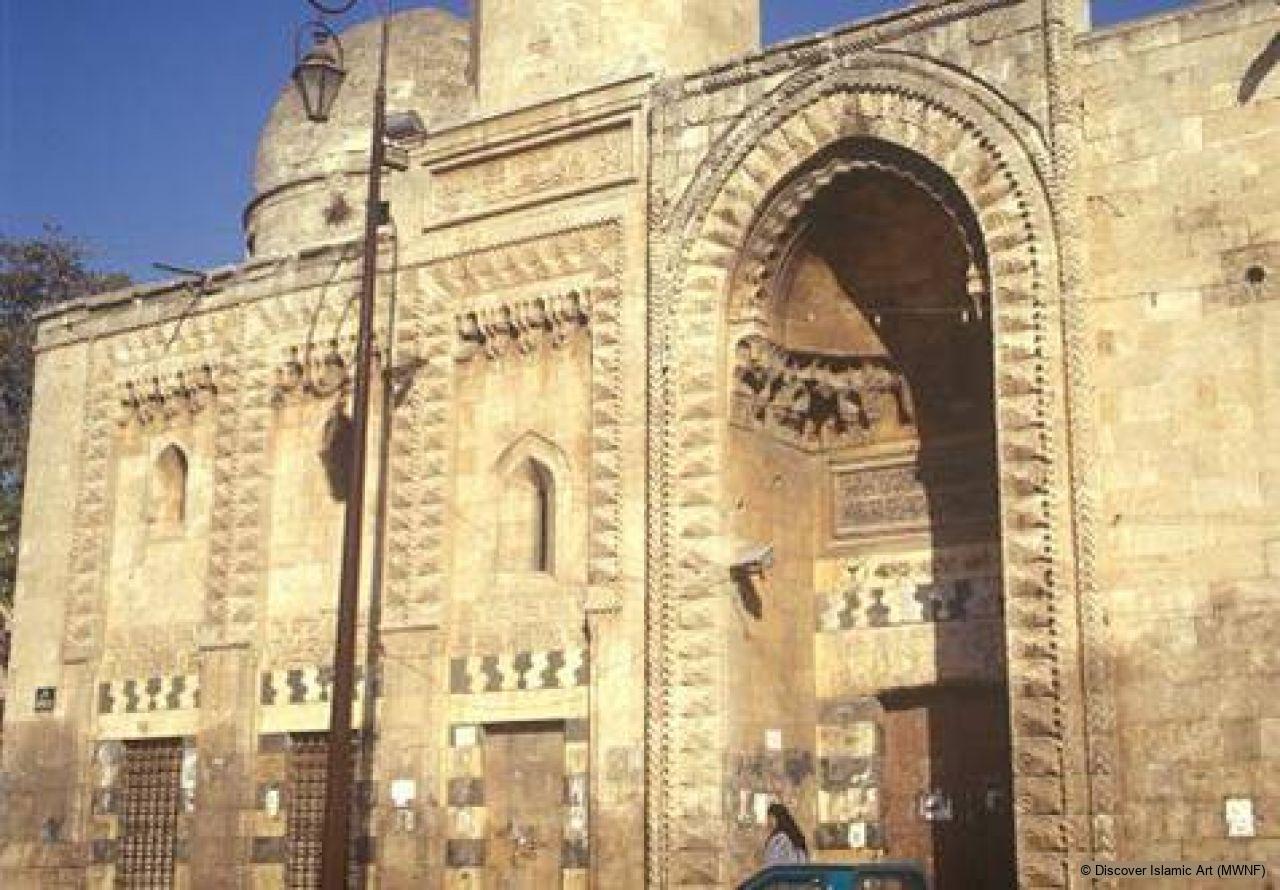
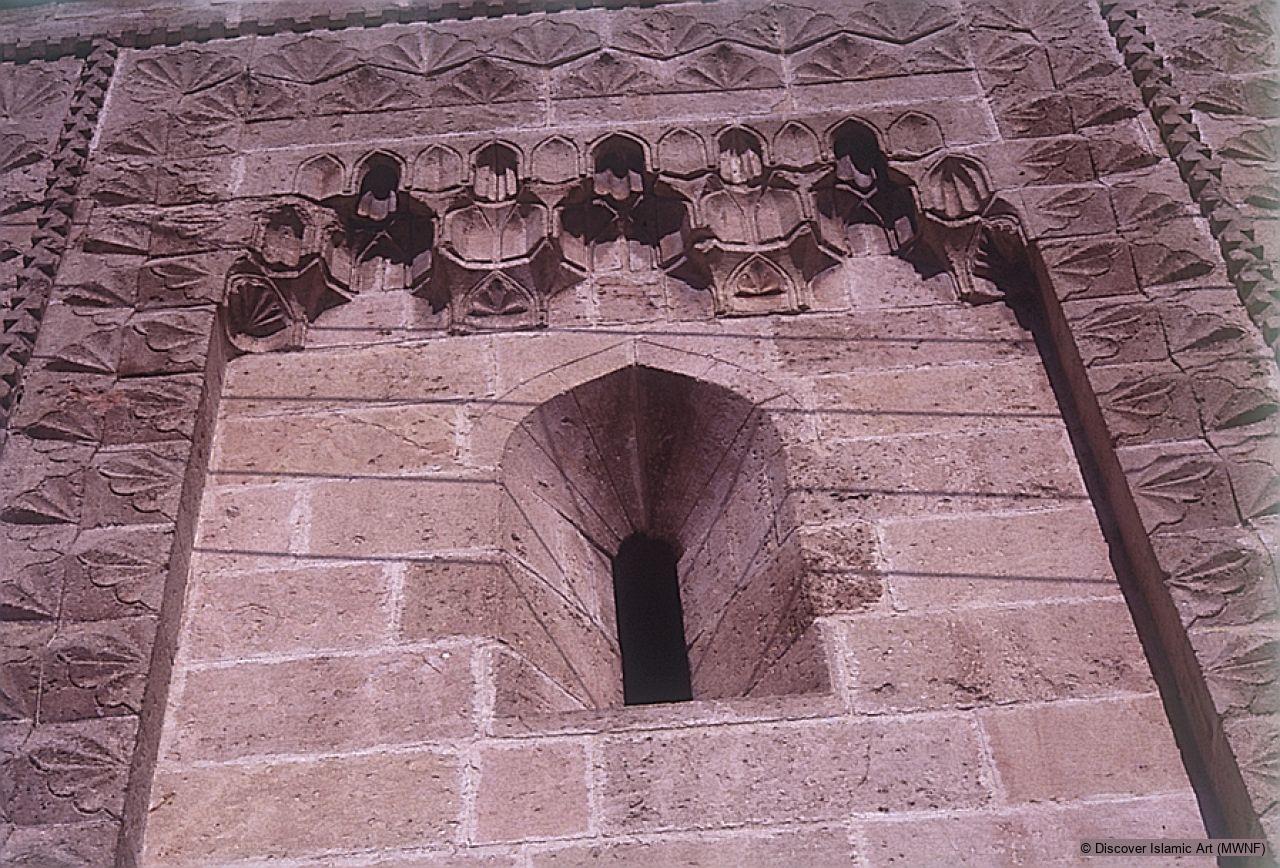
The structure is rectangular in shape measuring 42 m x 36 m with the main façade facing west and the secondary façade facing north. The west façade is decorated with three large and richly decorated rectangular frames containing windows on each side of the portal. They are applied at different distances from each other to correspond to the interior layout of the building. The windows are low and close to the ground, while the frames almost stretch up to the flat roof, finished by a row of muqarnas. The portal is recessed and capped by a pointed arch. The octagonal minaret rises to the left of the entrance on the west façade. The courtyard measures 20 m x 12.50 m and is surrounded by cross-vaulted porticoes on three sides. The 35 m x 10 m prayer hall is divided into two aisles by a row of six marble columns with muqarnas capitals, carrying a roof divided into five cross vaults. The mausoleum of the patron, Aqbugha al-Utrush is in the northwest corner of the mosque. It is a small quadratic structure measuring about 4 m x 4 m with a dome and two windows on both facades.
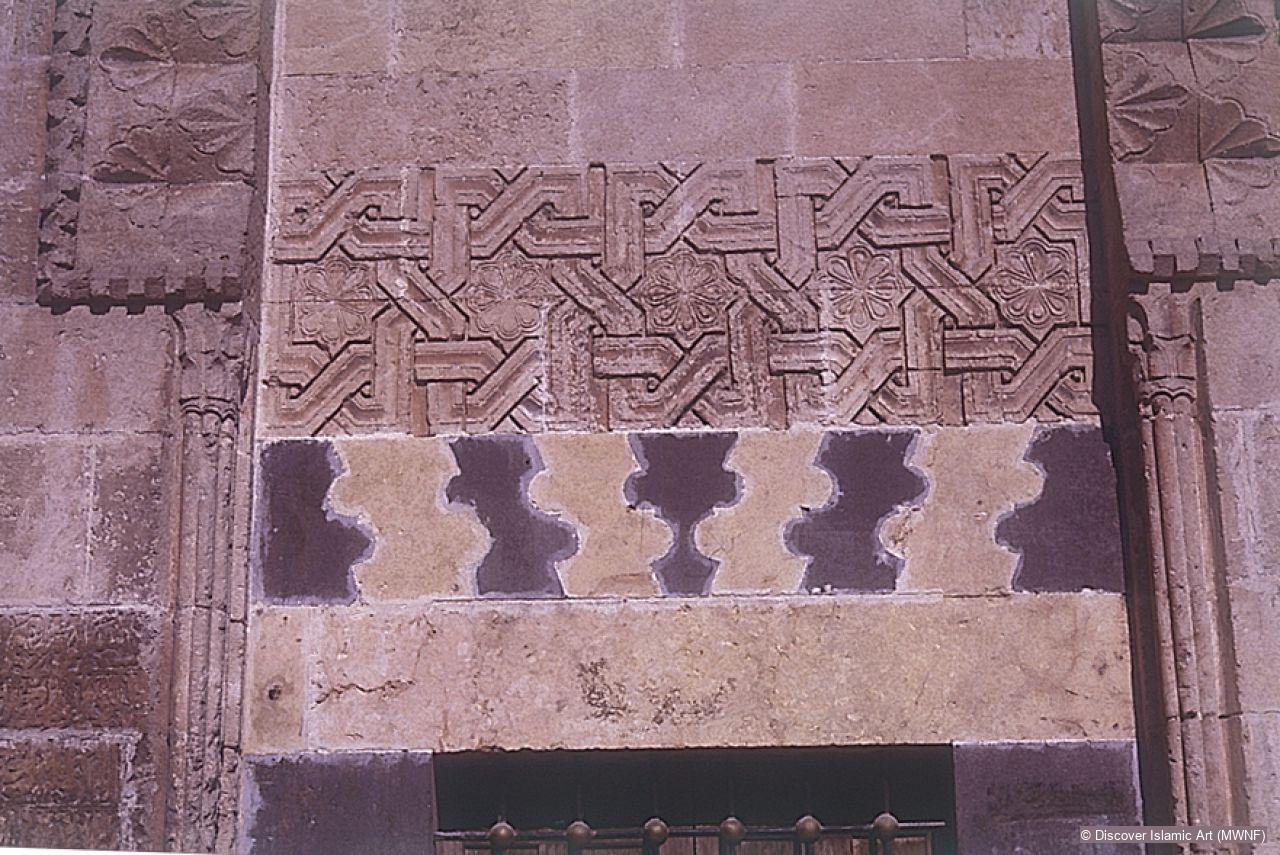
The architectural traditions of Cairo, Damascus and Aleppo formed the basis of Mamluk architecture, each having its own characteristics. In Damascus, the facades were accentuated by a combination of several different features, such as alternating two-coloured masonry (ablaq), elaborate stone-cut masonry, stone incrustations and interior tile decorations (see for example Madrasa al-Jaqmaqiyya). In Aleppo, the cross vault, first introduced at the Great Mosque of Aleppo in AH 684 / AD 1285, became a characteristic feature of local architecture, as did the fine, sophisticated masonry integrated into high, flat niches. The preservation of names of different Aleppine master-builders shows that this fashion was not characteristic of a single workshop, but was a widely used feature from the late AH 8th / AD 14th century onwards. The trend was inspired by the impressive monuments that could be seen in Cairo during the period, finding its earliest and most splendid example in the Friday Mosque, Jami al-Aqmar (AH 519 / AD 1125–6).
The Mamluk capital, Cairo, continuously attracted construction specialists from all over the empire. During periods of political stagnation, when building activities in the capital were reduced, these contractors would eventually return to their homeland, taking back characteristic features of the imperial style, and leaving traces in each of the major cities in which they worked.
The mosque was built by the Mamluk governor of Aleppo, Aqbugha al-Utrush, and served also as a mausoleum after his death in AH 806 / AD 1404. The main west façade is remarkable, with three large and richly decorated rectangular window frames that reach up to the flat roof. During the Mamluk period, the architecture of each major city in Egypt and the Levant developed its own characteristics. The Utrush Mosque is a fine example of typical Aleppine features, with its cross-vaulted prayer halls and the finely worked masonry in the niches of the façade.
How Monument was dated:
The foundation inscription in the third frame to the right of the entrance mentions the year and the patron. In the portal the inscription of the succeeding Governor Damurdash, the date of completion and the patron are mentioned. The medieval historian and geographer of Aleppo, Ibn Shihna (d. 1485), (known in the Latin languages as Ben Schounah), also mentions the foundation and completion of this monument.
Selected bibliography:
Gaube, H., and Wirth, E., Aleppo. Historische und geographische Beiträge zur baulichen Gestaltung, zur sozialen Organisation und zur wirtschaftlichen Dynamik einer vorderasiatischen Fernhandelsmetropole, Wiesbaden, 1984, p.337.
Herzfeld, E., “Matériaux pour un Corpus Inscriptionum Arabicarum: Syrie du Nord”, part 2:
Inscriptions et monuments d'Alep, 3 Vols, Cairo, 1955, pp.362–6.
Meinecke, M., “Die mamlukische Architektur”, ägypten und Syrien, 1992, Vol. I, p.135; Vol. II, p.295, cat. no. 26/2; p.308, cat. no. 26/24.
Meinecke, M., “Mamluk Architecture, Regional Architectural Traditions: Evolution and Interrelations”, Damaszener Mitteilungen, 2, 1985, pp.163–75.
Talas, M., Al-athar al-islamiyya wa-t-tarikhiyya fi Halab [The Islamic and Historical Monuments of Aleppo], Damascus, 1956.
Citation of this web page:
Verena Daiber "Utrush Mosque" in Discover Islamic Art, Museum With No Frontiers, 2026. 2026.
https://islamicart.museumwnf.org/database_item.php?id=monument;ISL;sy;Mon01;34;en
Prepared by: Verena DaiberVerena Daiber
Verena Daiber is an historian of Islamic art an archaeology. She studied Near Eastern Archaeology and Arabic Literature at the Free University of Berlin. After her employment as research associate at the German Archaeological Institute in Damascus she obtained her PhD at the University of Bamberg in 1991 on the public architecture of Damascus in the 18th century. Since 2017 she is the curator of the Bumiller Collection / Bamberg University Museum of Islamic Art that holds Islamic metalwork from the Persian world. After publishing on ceramics, architecture and imagery of the central Arabic lands, she works on the development and publishing of the Bumiller Collection.
Copyedited by: Mandi GomezMandi Gomez
Amanda Gomez is a freelance copy-editor and proofreader working in London. She studied Art History and Literature at Essex University (1986–89) and received her MA (Area Studies Africa: Art, Literature, African Thought) from SOAS in 1990. She worked as an editorial assistant for the independent publisher Bellew Publishing (1991–94) and studied at Bookhouse and the London College of Printing on day release. She was publications officer at the Museum of London until 2000 and then took a role at Art Books International, where she worked on projects for independent publishers and arts institutions that included MWNF’s English-language editions of the books series Islamic Art in the Mediterranean. She was part of the editorial team for further MWNF iterations: Discover Islamic Art in the Mediterranean Virtual Museum and the illustrated volume Discover Islamic Art in the Mediterranean.
True to its ethos of connecting people through the arts, MWNF has provided Amanda with valuable opportunities for discovery and learning, increased her editorial experience, and connected her with publishers and institutions all over the world. More recently, the projects she has worked on include MWNF’s Sharing History Virtual Museum and Exhibition series, Vitra Design Museum’s Victor Papanek and Objects of Desire, and Haus der Kulturen der Welt’s online publication 2 or 3 Tigers and its volume Race, Nation, Class.
MWNF Working Number: SY 42
RELATED CONTENT
Related objects
Related monuments

Islamic Dynasties / Period
Download
As PDF (including images) As Word (text only)