

 Back
Back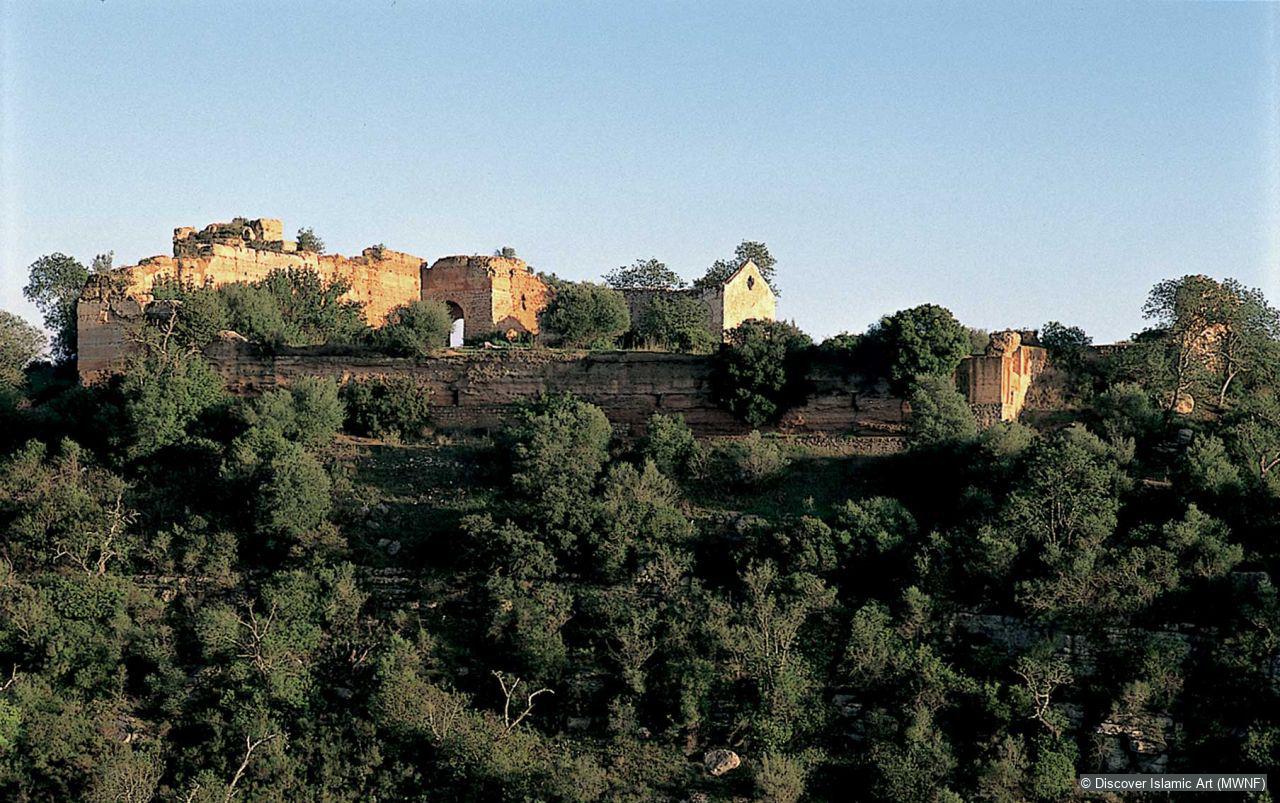
Name of Monument:
Paderne Castle
Location:
Paderne, Albufeira, Portugal
Date of Monument:
Hegira 6th–7th / AD 12th–13th century
Period / Dynasty:
Essentially Almohad (there are vestiges from earlier and later periods in the fortification and surrounding area)
Description:
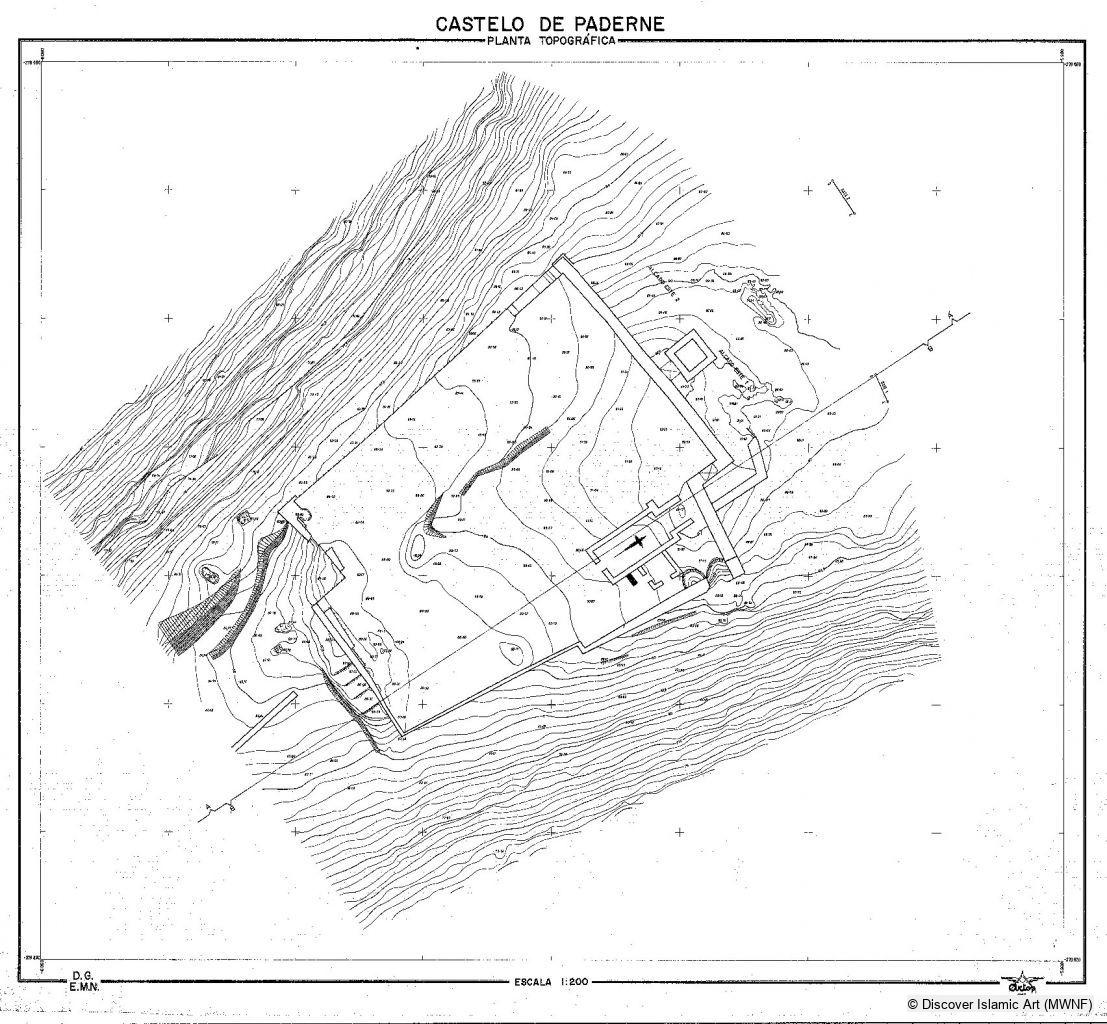
Paderne Castle is in the Barrocal region, a little over 10 km to the north of the Algarve coast. The fortification was constructed on a rocky outcrop surrounded by the Ribeira de Quarteira, giving it an unrivalled strategic position.
It is not known precisely in which period this fortification was built, nor the reason for its construction. However, some answers can be deduced from its technique of construction.
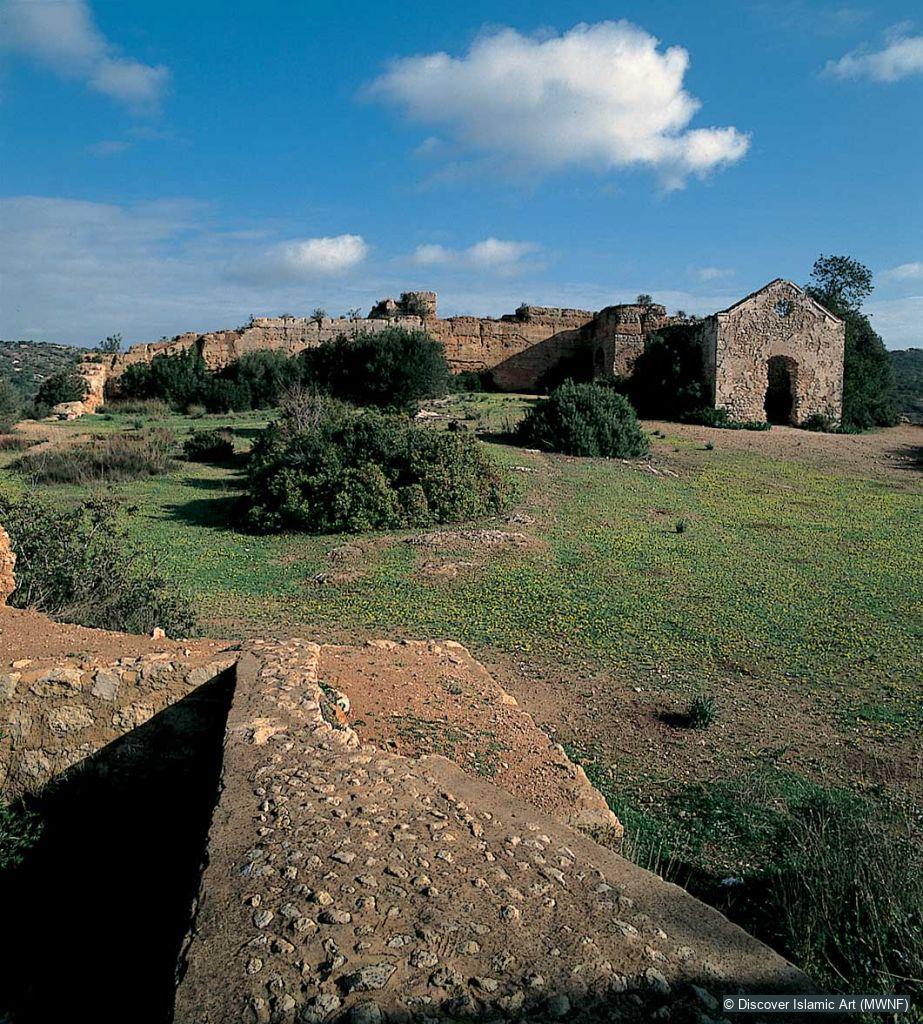
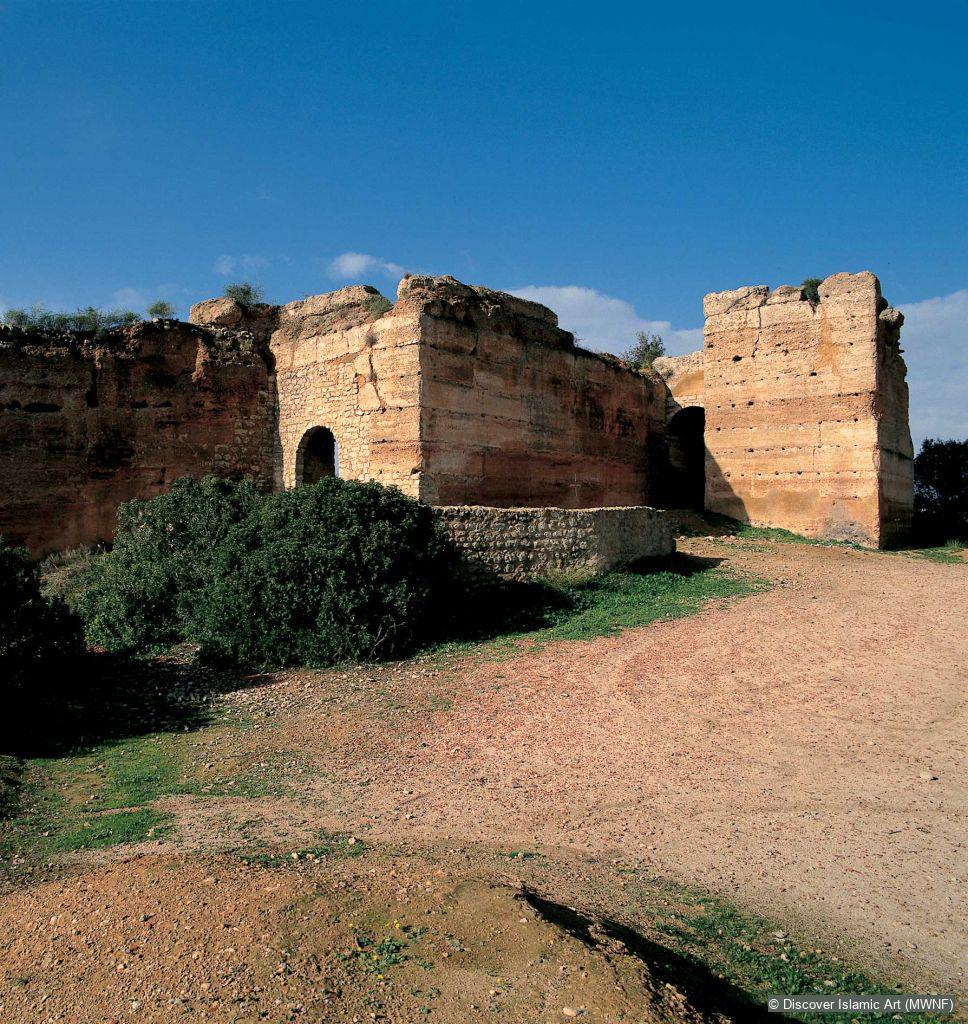
This fortification, now partially in ruins, occupies nearly a hectare in area and its ground plan is trapezoidal. The side facing the area with the least natural defences has a large tower built of solid military tabiyya (dry mud, rich in lime), standing out from the wall – this is a watchtower joined to the wall by an upper passageway.
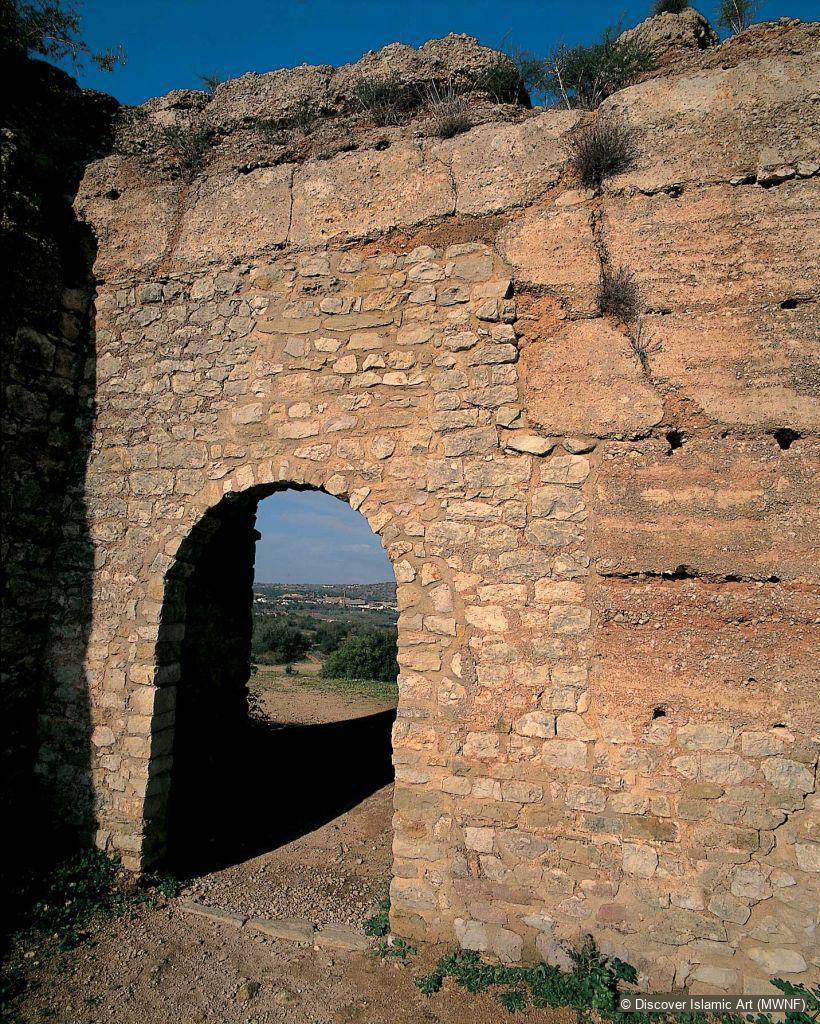
In this tower, practically the only one existing in the whole walled enclosure, and in the wall close to it, it is still possible to see whitewashed strips, applied to the area where the various layers of tabiyya were joined and which, from a distance, would have created the illusion that the walls and tower were built of very large blocks of stone. The walls are nearly 1.8 metres thick and a socle (plinth) of mortared stone can be seen, on which the tabiyya is based. Running along the perimeter of the wall on the outside are several vertical openings fairly regularly spaced apart, which enabled the water that might accumulate on the inside of the fortification to drain away.
The tower of this castle was protected by a barbican or rampart which crosses it and which can partly be seen, although it has largely collapsed. This wall, lower than the main wall, also defended the entrance of the fortification.
The gateway of this fortification was at an angle to the main wall so that there was not a straight and direct front entrance. It was, in fact, an L-shaped entrance, designed to prevent a sudden incursion into the fortification, and therefore a feature which would hold back any rapid invading force. However, although the gateway area is conserved, the stonework of the present entrance is the result of a recent restoration.
On the inside of the castle, in addition to a cistern, next to its south wall, the ruins of the former chapel of Nossa Senhora do Castelo are conserved, possibly dating from the 14th century and which may be have been built on top of constructions from the Islamic period – a situation which may be clarified by the archaeological work that has now begun. Ceramics and walls built of tabiyya from the Almohad period were found in excavations in 1987, as well as walls of houses dating from later than the 13th century and also ceramics and coins with parallels in the 14th–16th centuries. Around the castle there are some vestiges from the Islamic period.
Paderne is mentioned in the account of the conquest of Silves in 1189, by the Portuguese king Sancho I and it is possible that its system of defence had been altered by the Almohads. It is mentioned again, in the middle of the 13th century, when it was taken by the Order of Santiago. It was then occupied in the 14th and 15th centuries, but was destroyed in the earthquake of 1755.
Paderne Castle is in the Barrocal area, just over 10 km north of the Algarve coast. Its location, atop a magnificently steep hill, would have significantly hindered any attempted assaults. With a single chicane entrance defended by a flanking tower, the 10,000m2 enclosure could only have served as a military stronghold or strategic fortress, and its location must have been linked to the important road to Albufeira and the brick bridge over the Quarteira River at the bottom of the slope.
How Monument was dated:
The Crónica da Conquista do Algarve [Chronicle of the Conquest of the Algarve] clearly states that the fortification was in use just prior to the Christian conquest of the region (mid 7th / 13th century). On the other hand, the simultaneous existence of constructions made of very lime-rich tabiyya, commonly known as military tabiyya, with an L-shaped gateway, point to the final phases of Islamic dominion. Added to this is the fact that Paderne has an enormous watchtower, of a type particularly characteristic of the Almohad period.
Selected bibliography:
Catarino, H., “Escavações Arqueológicas nos Castelos de Salir e Paderne”, in 5º Congresso do Algarve, Vol. I, Silves, 1988, pp.35–8.
Catarino, H., “O Castelo de Paderne (Albufeira): Resultados da Primeira Intervenção Arqueológica”, Arqueologia Medieval, Vol. 3, Porto, 1994, pp.73–87.
Correia, F. B., “Fortificações Muçulmanas no Algarve: Estado da Questão e Perspectivas”, in 4º Congresso do Algarve, Vol. I, Silves, 1986 , pp.97–102.
Correia, F. B., “Fortificações Muçulmanas em Portugal: Alguns Apontamentos”, Congreso de Arqueología Medieval Española, Vol. II, Madrid, 1987, pp.501–509.
Correia, F. B., and M. C. Veiga, “Paderne e Salir: Duas Fortificações Muçulmanas”, in Livro do Congresso: Segundo Congresso sobre Monumentos Militares Portugueses, Lisbon, 1984, pp.105–12.
Citation of this web page:
Fernando Branco Correia "Paderne Castle" in Discover Islamic Art, Museum With No Frontiers, 2026. 2026.
https://islamicart.museumwnf.org/database_item.php?id=monuments;ISL;pt;Mon01;13;en
Prepared by: Fernando Branco CorreiaFernando Branco Correia
Fernando Branco Correia é arqueólogo e Assistente do Departamento de História da Universidade de Évora, onde lecciona as disciplinas de História e Cultura Islamo-Árabe, História de al-Andalus e Arqueologia Árabe-Islâmica, sendo ainda, nos últimos anos, responsável pelo Gabinete de Estudos Árabes (fundado por Adel Sidarus) da mesma universidade. É autor de trabalhos sobre Fortificações e História político-militar do al-Andalus, sobretudo da região entre os rios Tejo e Guadiana.
Translation by: Gilla Evans
Translation copyedited by: Monica Allen
MWNF Working Number: PT R
RELATED CONTENT
Islamic Dynasties / Period
On display in
Exhibition(s)
See also
Virtual Visit Exhibition Trail
In the Lands of the Enchanted Moorish Maiden. Islamic Art in Portugal
Download
As PDF (including images) As Word (text only)