

 Back
Back



Name of Monument:
Yussef Dey Mosque
Location:
At the entrance to the town on the kasbah side, Tunis, Tunisia
Date of Monument:
Hegira 1020 / AD 1612
Architect(s) / master-builder(s):
Ibn Ghaleb al-Andalusi.
Period / Dynasty:
Husaynid-Ottoman
Patron(s):
Yussef Dey.
History:
After the annexation of Ifriqiya to the Ottoman Empire in the 10th / 16th century the number of Hanefite-rite Turks grew constantly. Two Malekite mosques, the Kasbah Mosque and the al-Qsar Mosque, were then given over to the Hanefite rites. Then Yussef Dey decided to give Tunis its first Turkish mosque. The works were commenced in 1023 (1614) and finished one year later.
Description:
The mosque bears the name of its founder and is particularly interesting because, while preserving several features of the Ifriqiyan mosque, it introduces several architectural novelties in its layout and construction.
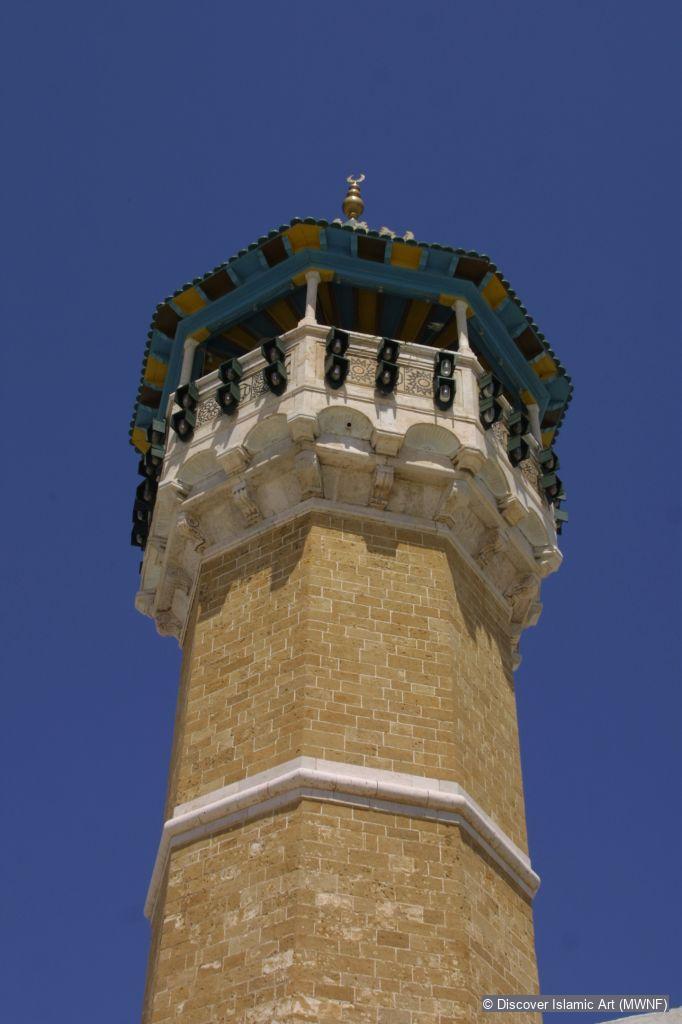
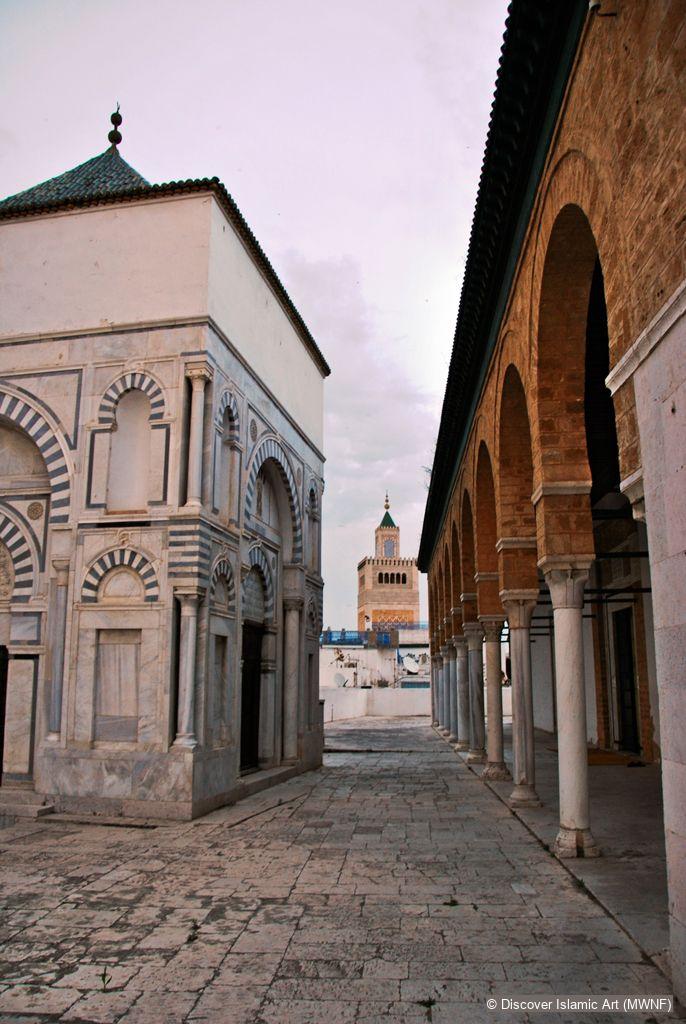
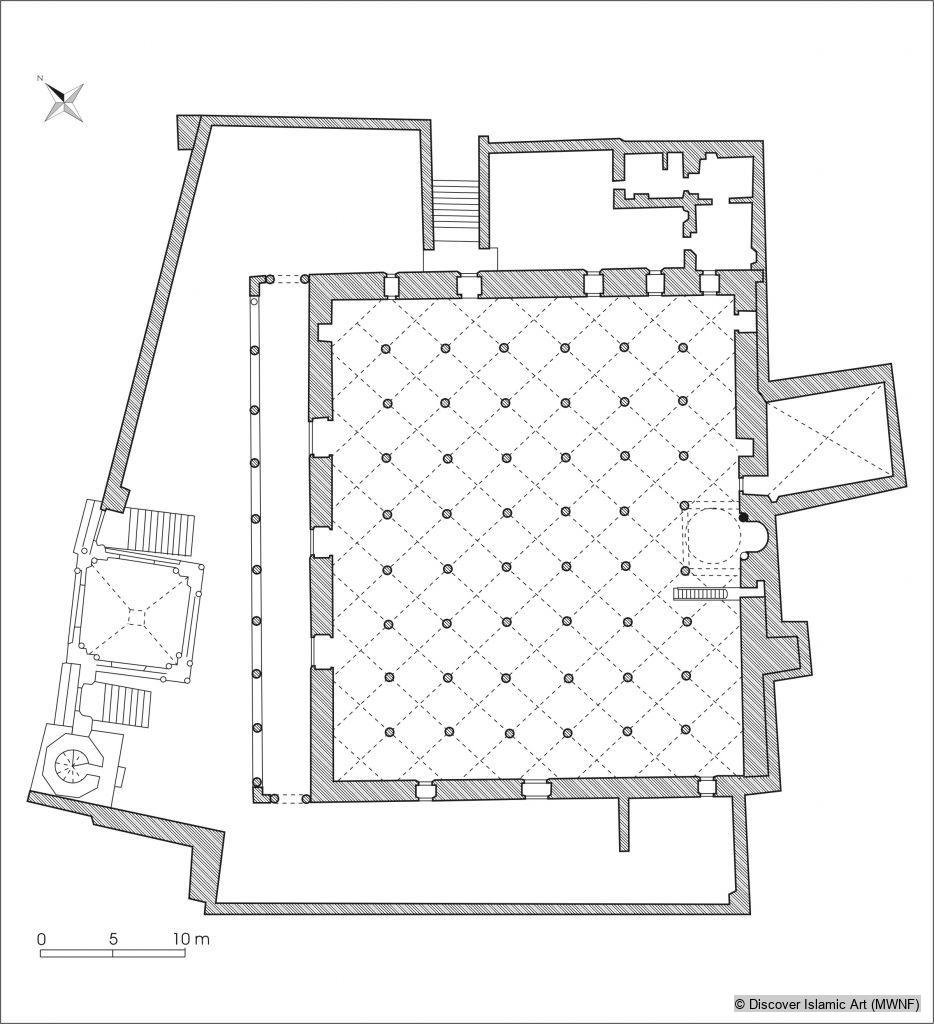
The prayer hall is no longer set behind a single courtyard, but framed with courtyards on the eastern, western and northern sides. Along the north façade, the portico serves as a substitute for the narthex in local mosques. An octagonal minaret rises from a square base at the north-west corner. At the top is a balcony with a wooden awning, above which there is a lantern turret with a pyramidal roof covered with green tiles. This octagonal tower was to serve as a model for al-Jadid Mosque and for the Mosque of Yussef Sahib al- Taba'a.
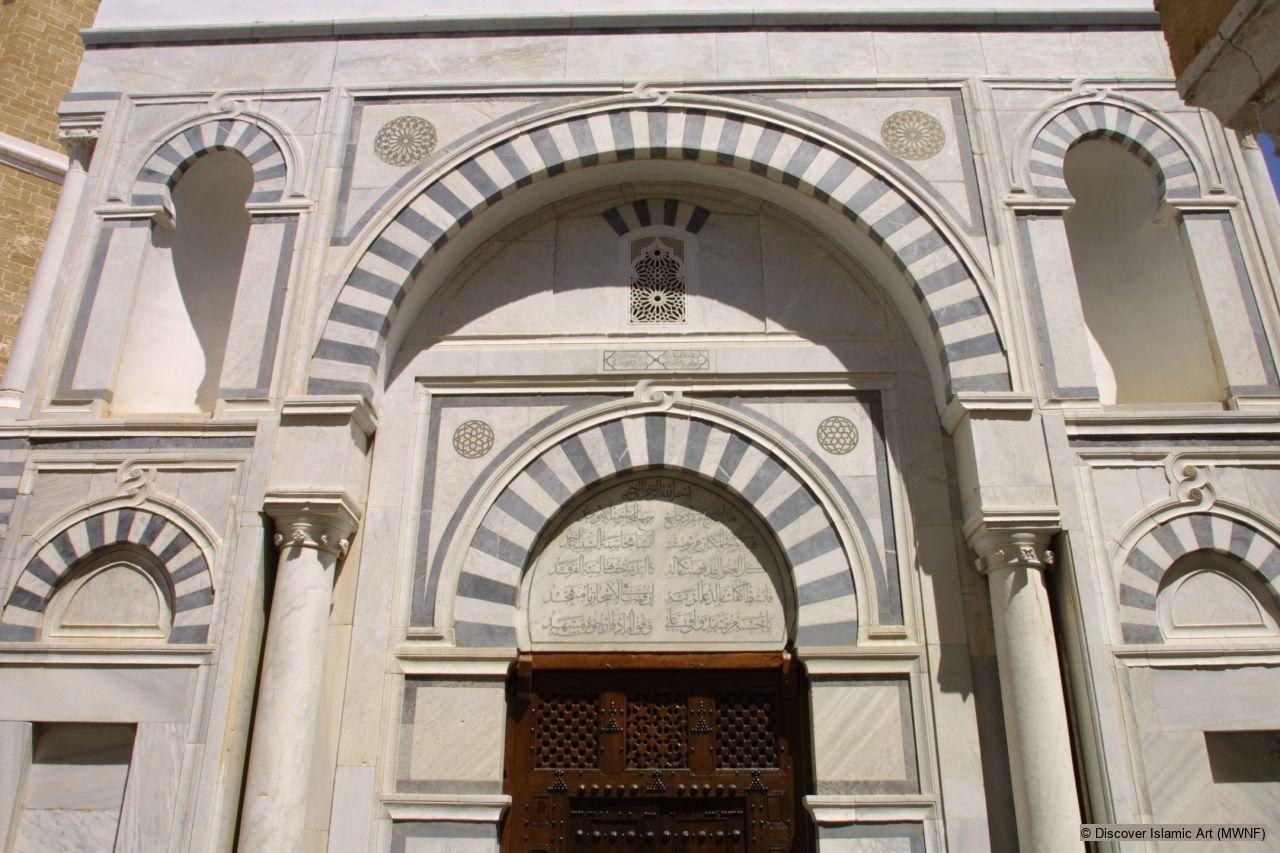
The mausoleum, or turbe, built along the façade, is the first example in Tunis of a funerary mosque where the tomb of the founder is associated with the place of worship. The tomb of Yussef Dey is built on a square plan and has a pyramidal roof with green tiles. On each face is a large central arcature, flanked by two storeys of sunken niches with flat rear walls. The corner columns set on both levels considerably lighten the mass. The white marble flooring is enhanced with alternating blocks of black and white. The date of the turbe is inscribed on the central arcature.
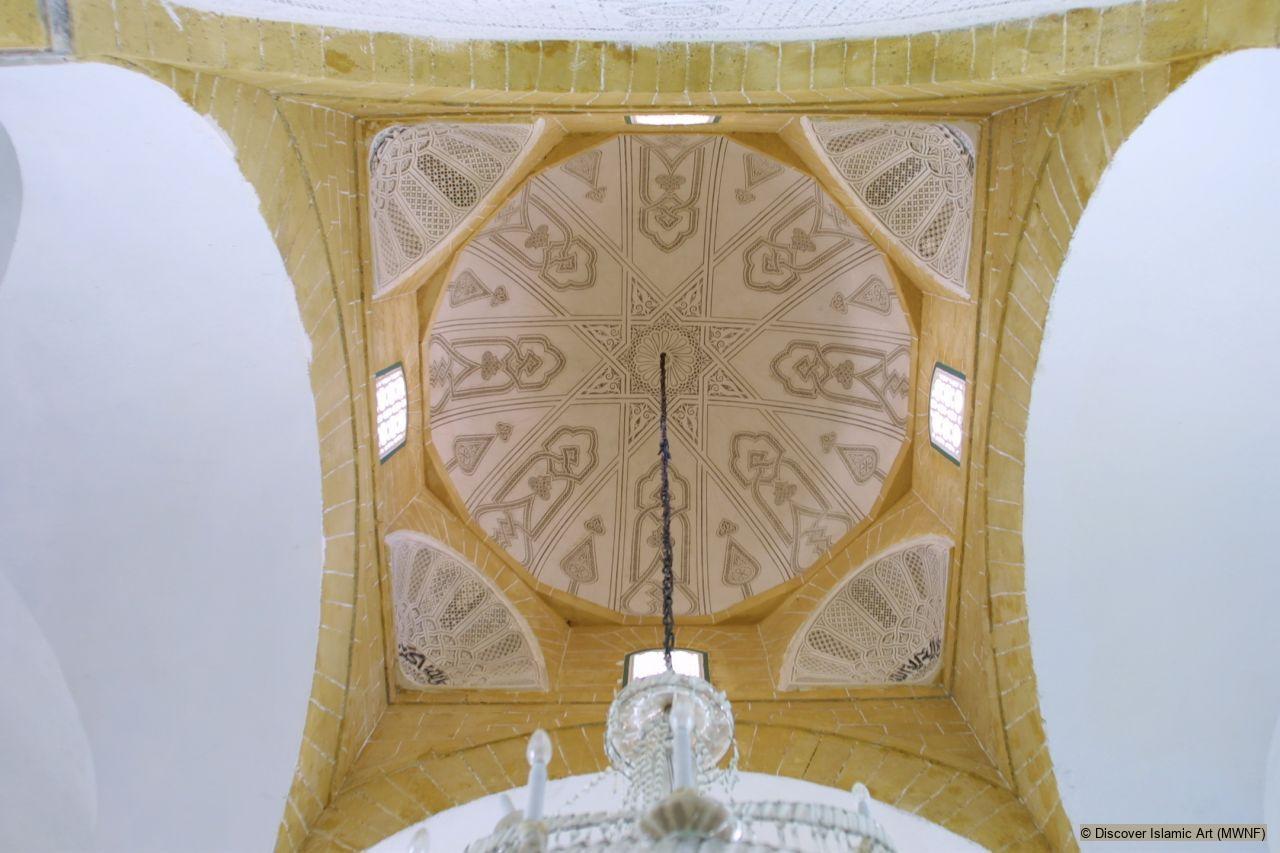
The innovations, that is to say, the U-shaped courtyard, the octagonal minaret and the addition of the turbe, are outside the prayer hall. The prayer hall perpetuates the classic layout of the rectangular, pillared hall with nine naves and seven bays. The central nave and the bay parallel to the qibla wall are larger than the others and, at their meeting point, form a T-shape in front of the mihrab. The columns are of several types but, apart from a few ancient examples, all have Hafsid capitals. The roof is of groined vaults. At the front of the mihrab is an octagonal-based dome with scalloped pendentives.
The only new feature in this oratory is the stone-built minbar with its polychrome marble panelling. Malekite minbars are usually made of wood.
This was the first Turkish mosque in the Tunis kasbah, built in the early AH 11th / AD 17th century. With its square plan and green-tiled pyramid roof, this mosque, which was named after its founder, introduced a new style of architecture. The innovations include a U-shaped courtyard, an octagonal minaret and a mausoleum (turbe). This type of funerary mosque, in which the founder’s tomb was combined with a place of worship, was a Tunisian innovation.
How Monument was dated:
According to the inscription above the main entrance to the prayer hall, the works began on 10 Shawwal 1023 (13th November 1614) and went on until 22 Ramadan (14th October 1024).
Selected bibliography:
Ben Mami, M. B., “Djami Youssef Dey”, Africa revue, vol. 16, 1998, pp.107–40.
Marçais, G., L'architecture musulmane d'Occident, Paris, 1954, pp.461–2.
Golvin, L., Essai sur l'architecture religieuse musulmane, Paris, 1970.
Citation of this web page:
Jamila Binous "Yussef Dey Mosque" in Discover Islamic Art, Museum With No Frontiers, 2026. 2026.
https://islamicart.museumwnf.org/database_item.php?id=monuments;ISL;tn;Mon01;33;en
MWNF Working Number: TN 33
RELATED CONTENT
Islamic Dynasties / Period
On display in
Exhibition(s)
See also
Virtual Visit Exhibition Trail
Ifriqiya. Thirteen Centuries of Art and Architecture in Tunisia
Download
As PDF (including images) As Word (text only)