

 Back
Back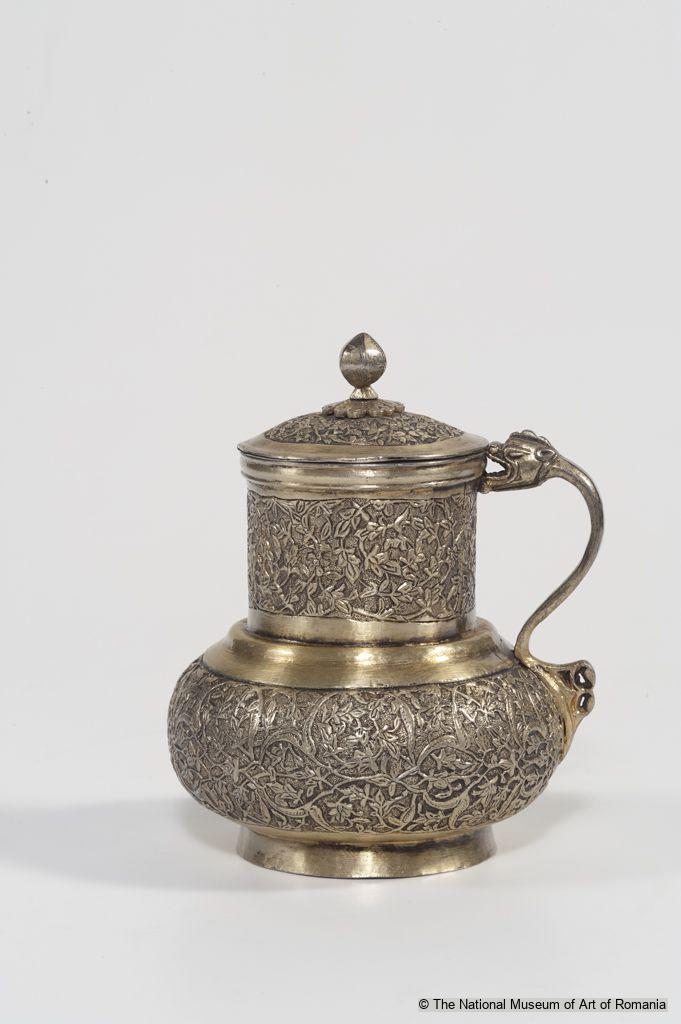
This item has been added to the Database within the Explore Islamic Art Collections project. Information is available in: English, Arabic.
Name of Object:
Jug
Location:
Bucharest, Romania
Holding Museum:
The National Museum of Art of Romania
About The National Museum of Art of Romania, Bucharest
Date of Object:
Hegira 10th century / AD first half of the 16th century
Museum Inventory Number:
14288 / M 1651
Material(s) / Technique(s):
Cast silver, parcel-gilt, hammered, chiselled, engraved
Dimensions:
Height: 12cm
Period / Dynasty:
Ottoman
Provenance:
Ottoman Empire
Description:
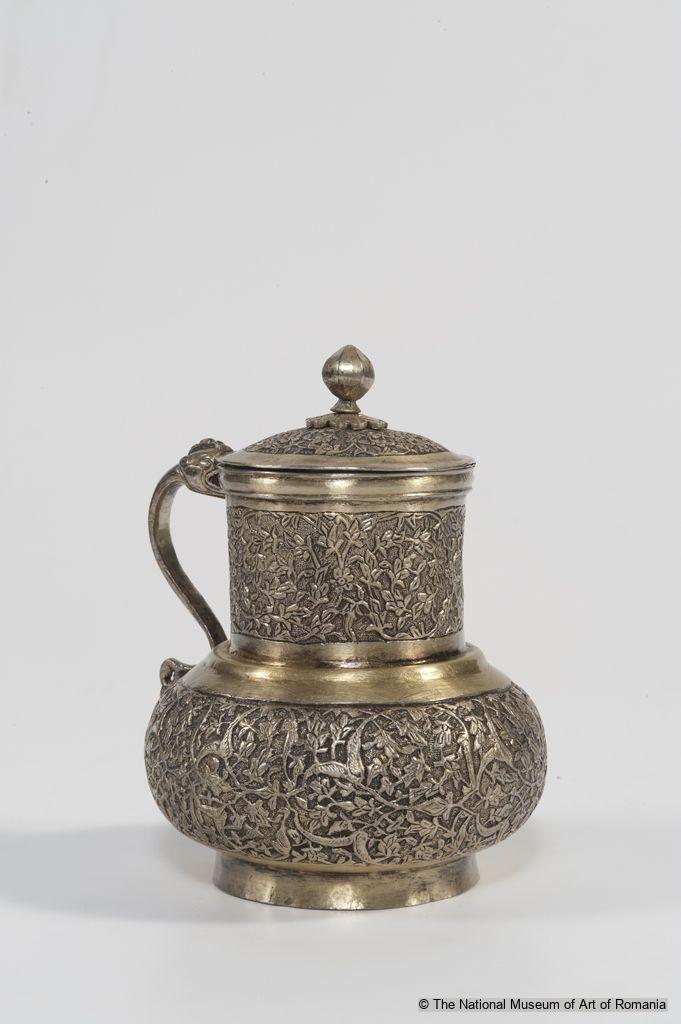
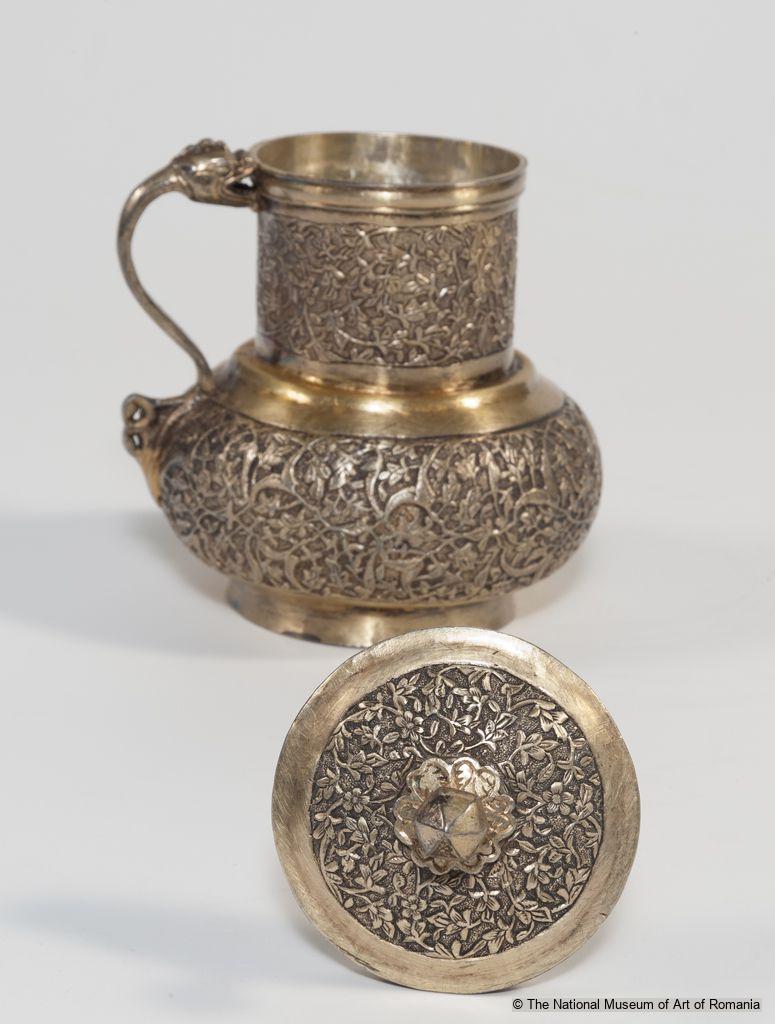
This jug, with its rounded body, cylindrical neck with cover and dragon-shaped handle, is one of the few surviving examples of sixteenth-century Ottoman silver. Several similar objects are currently preserved in museums and collections outside Turkey. The jug is reminiscent of the metal or jade Timurid vessels inspired by the art of the Mongol period. The differences concern not so much the shape as the various decoration techniques: whereas the Timurid metal vessels are inlaid with silver, the Ottoman wares feature hammered, engraved, and chiselled motifs. The raised decoration on the body, neck and cover is characteristic of the first half of the sixteenth century: the composition combines rumi (half-palmettes) arabesques and motifs of Chinese origin. This decorative repertoire, still closely linked to Timurid traditions, but likewise indebted to Balkan silver, was also typical for the Ottoman ceramics of the time. The jug was probably donated to the Monastery of Bistriţa (Vâlcea County) by a boyar or a voivode. Its exquisite workmanship testifies to the opulence and refinement of the Romanian princely courts, extensively documented, but illustrated only by a few extant objects.
How date and origin were established:
Stylistic analysis
How Object was obtained:
Transferred in 1948 from the National Museum Carol I in Bucharest.
How provenance was established:
Stylistic analysis
Selected bibliography:
Atıl, E., The Age of Sultan Suleyman the Magnificent, Washington, D.C. / New York: National Gallery of Art, 1987.
Dunca, M., Islamic Art at the National Museum of Art of Romania, Bucharest: National Museum of Art of Romania, 2015: 62, no. 21.
Nicolescu, C., Argintăria laică şi religioasă în ţările române (sec. XIV-XIX), Bucharest: Muzeul de Artă al Republicii Socialiste România, 1968: 87, no. 56, fig. 41.
Citation of this web page:
Mircea Dunca "Jug" in Explore Islamic Art Collections. Museum With No Frontiers, 2026.
https://islamicart.museumwnf.org/database_item.php?id=object;EPM;rm;Mus21;6;en
Prepared by: Mircea Dunca
MWNF Working Number: RO1 06
RELATED CONTENT
Islamic Dynasties / Period
On display in
Exhibition(s)
Water in Islam
The Symbolism of Water in sacred Texts, secular Literature, and Science | Water in Human Creativity: Literature, Poetry, and EpicsMWNF Galleries
MetalworkDownload
As PDF (including images) As Word (text only)