

 Back
Back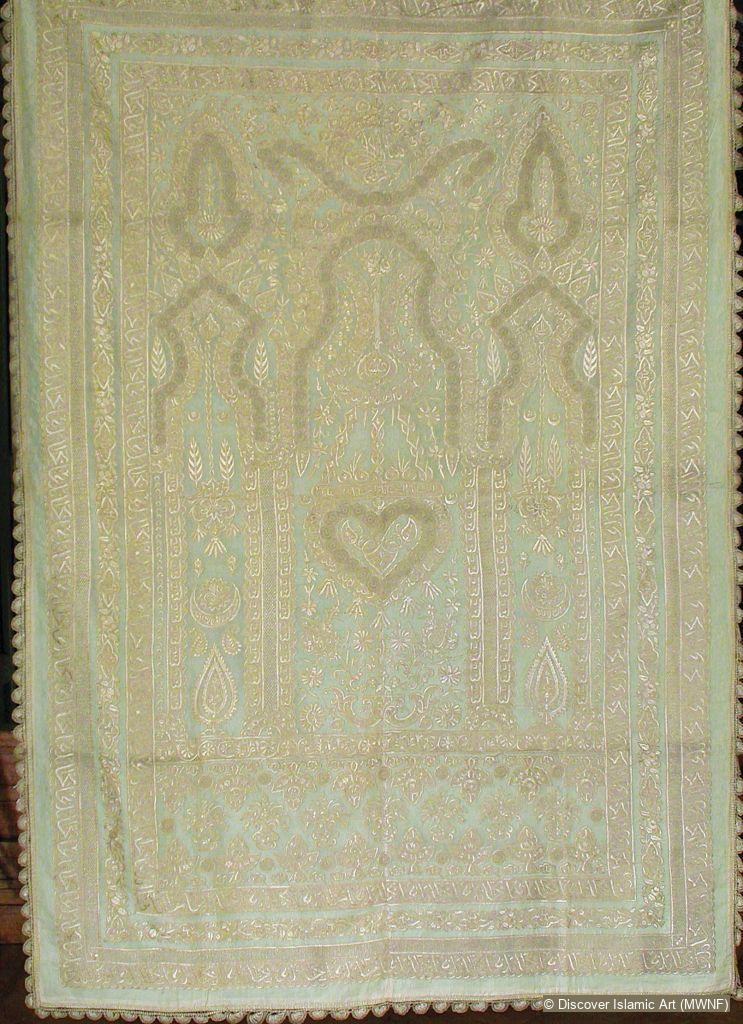
Name of Object:
Textile
Location:
Rome, Italy
Holding Museum:
Museum of Civilisations | Museum of Oriental Art “Giuseppe Tucci”
About Museum of Civilisations | Museum of Oriental Art “Giuseppe Tucci”, Rome
Date of Object:
Hegira 13th century / AD 19th century
Museum Inventory Number:
17565
Material(s) / Technique(s):
Silk satin and organzine embroidered with metal thread.
Dimensions:
Height 277 cm, width 192 cm
Period / Dynasty:
Ottoman
Provenance:
Turkey, Egypt or Palestine.
Description:
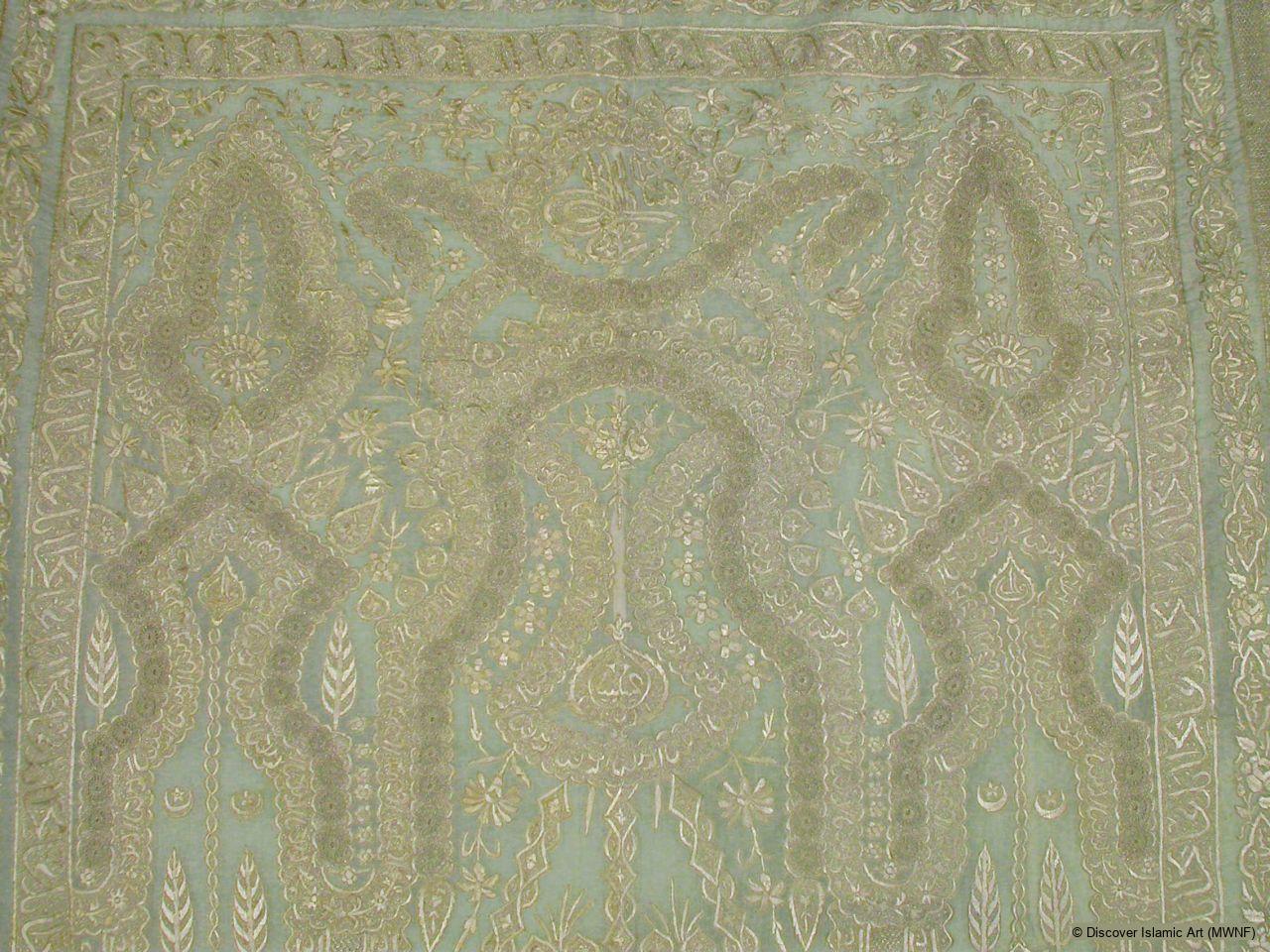
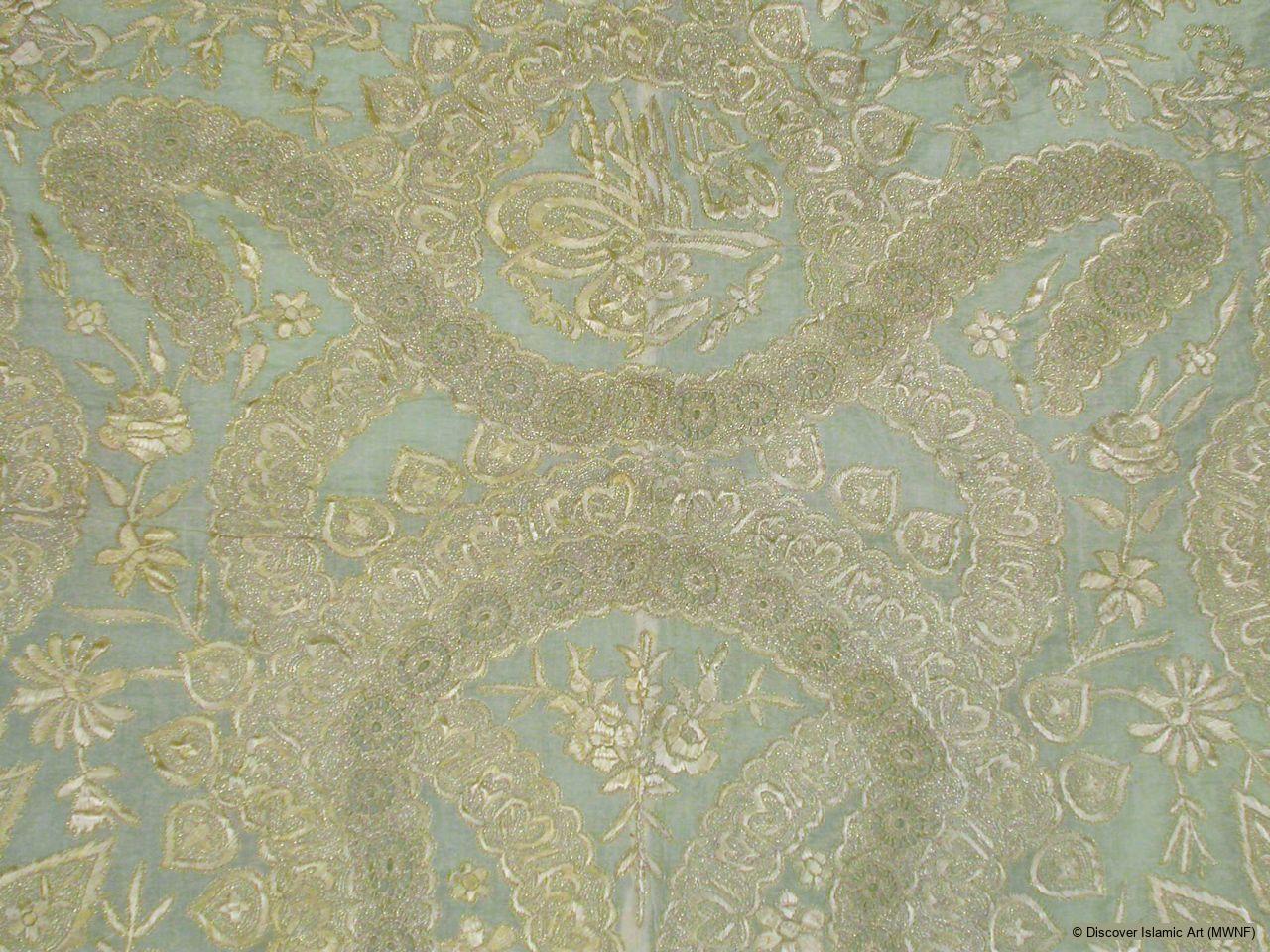
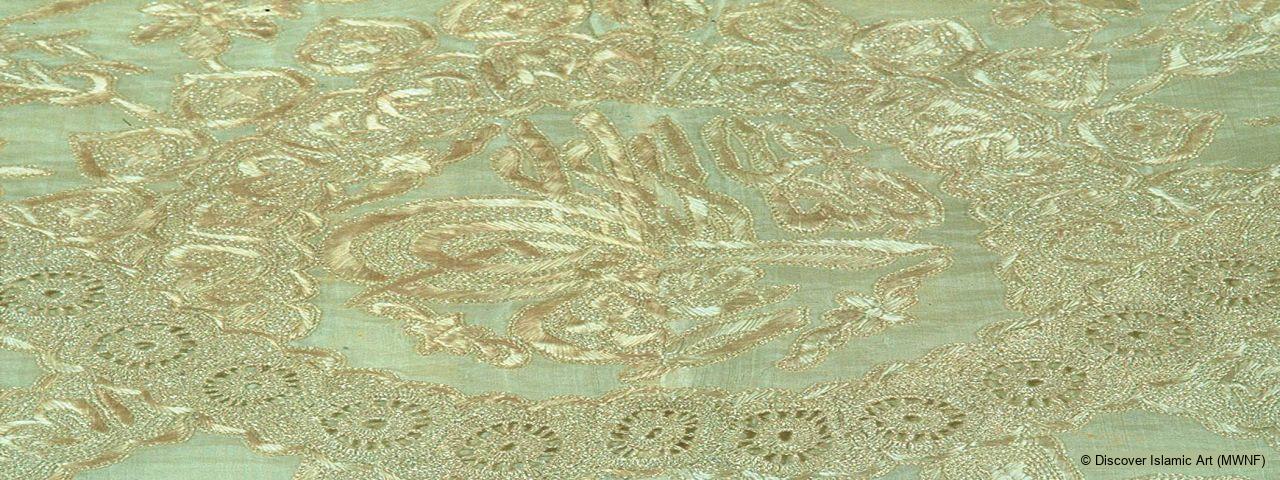
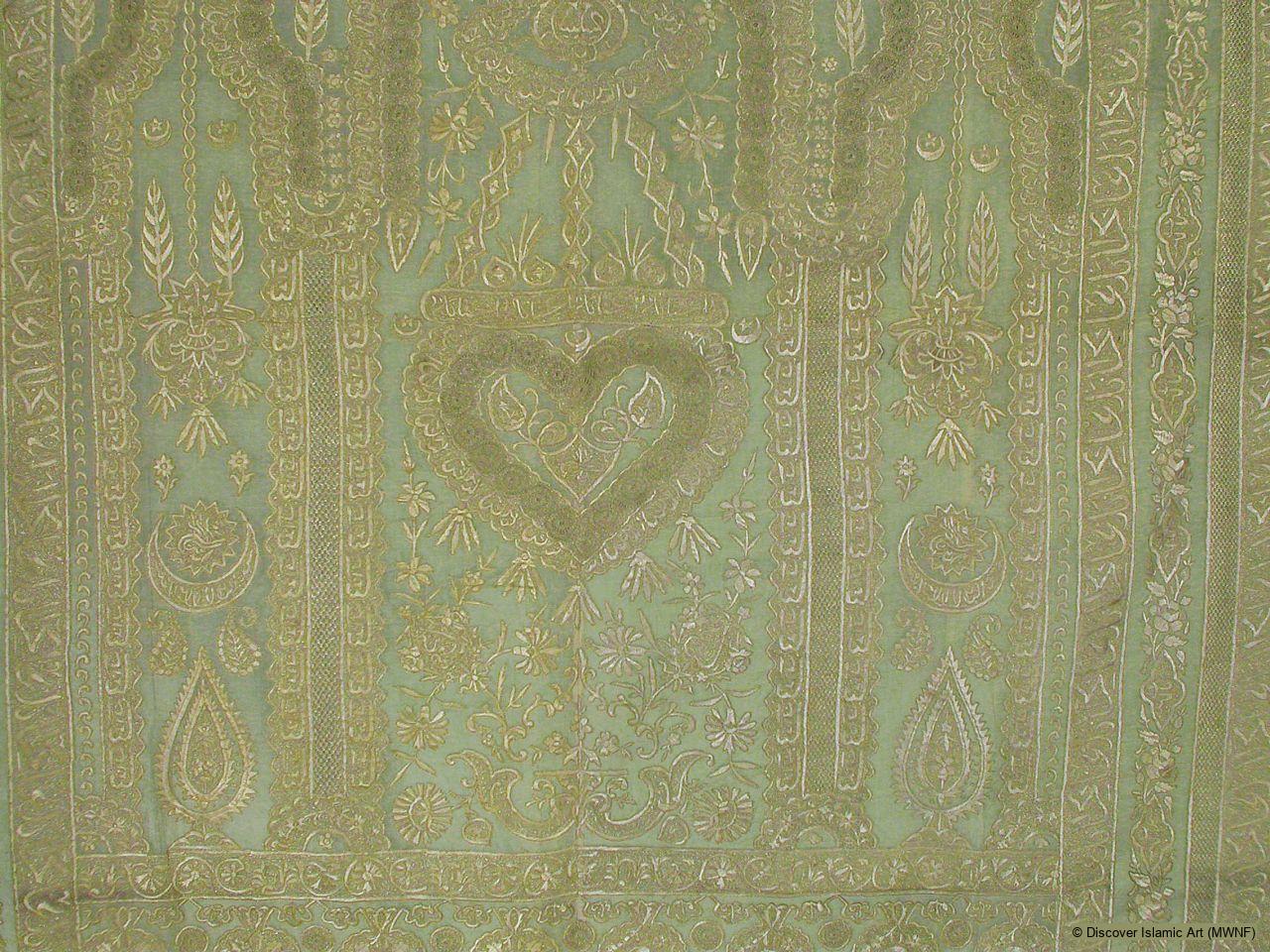
This large textile is embroidered on ivory-coloured organzine with lightweight pale-green silk satin (atlas) used as a base. The piece is particularly intricate and extremely refined, and most of it was needle-embroidered using silver-plated copper thread. The principal decorative motif is an ornate centre that resembles a prayer niche (mihrab), which is formed by a poly-lobed arch standing on two small columns, within which hangs a mosque lamp. A double rectangular cornice rounds off the decoration of the fabric. Its entire surface has been finely worked with a rich variety of motifs, including naturalistic vegetal motifs (flowers, leaves and small cypress trees) and epigraphic motifs. The repeated appearance of the tughra, the official monogram of the sultan as stamped on state documents, is of particular interest. Other inscriptions reproduce religious words and expressions relating to the Qur'an, both to ward off evil (‘ana gelse red’’ – ‘if difficulties arise, drive them away’) and for good omens (‘el'an ba ' d-din’ – ‘always with faith’). This fabric results from the manufacture of prayer mats (seccade) during the Ottoman era at the end of the AH 13th / AD 19th century. This piece may have been produced in Turkey or Egypt, although it was probably made in Ottoman Palestine.
View Short DescriptionThis sumptuously decorated fabric is a seccade, or prayer mat, finely decorated with naturalistic, plant and epigraphic motifs. It also includes the tughra (monogram) of Sultan Mustafa IV.
How date and origin were established:
From stylistic analysis, confirmed by the tughra, which is a late reproduction of the tughra of the Ottoman Sultan Mustafa IV (1222–3 / 1807–8).
How Object was obtained:
Purchase.
How provenance was established:
Through comparison with textile in the Museo del Tesoro di S. Pietro in the Vatican (see Orlando in Bibliography).
Selected bibliography:
Fontana, M. V., “Un Seccade Ottomano Tardo Ottocentesco'” Turcica et Islamica. Studi in Memoria di Aldo Gallotta, Università degli Studi di Napoli “L'Orientale”, Is.IAO, Series Minor, LXIV, Naples, 2003, pp.185–203.
Orlando, F. S., Il Tesoro di S. Pietro, Milan, 1958, p.90 and table 164.
Taylor R., Ottoman Embroidery, London, 1993
Torre P., “Tessuto Ricamato di Epoca Ottomana”, in Ministero per i Beni e le Attività Culturali: Acquisizioni e Donazioni 1999–2000, Rome, 2002, pp.72–3.
Torre P., “Arte Tessile di Epoca Ottomana nei Corredi di una Famiglia di Aleppo”, in Un Oriente di Seta e d'Oro (ed. P. Torre), Rome, 2003, pp.32–56.
Citation of this web page:
Paola Torre "Textile" in Discover Islamic Art, Museum With No Frontiers, 2026.
https://islamicart.museumwnf.org/database_item.php?id=object;ISL;it;Mus01;5;en
Prepared by: Paola TorrePaola Torre
Responsabile del Dipartimento di Archeologia e Arte Islamica e del Servizio Educativo presso il Museo Nazionale d'Arte Orientale “Giuseppe Tucci” di Roma.
Laureata in Arte islamica, ha svolto per anni attività di docenza presso l'Istituto Universitario Orientale di Napoli ed è autrice di numerose pubblicazioni e studi scientifici riguardanti soprattutto la ceramica del mondo islamico, con particolare riferimento alla produzione dipinta a lustro metallico, dalla Mesopotamia alla Spagna.
Copyedited by: Pier Paolo RacioppiPier Paolo Racioppi
Laureato e specializzato in storia dell'arte presso l'Università di Roma “La Sapienza” sta conseguendo il dottorato di ricerca in Storia e conservazione dell'oggetto d'arte e d'architettura presso l'Università di Roma TRE. Ha svolto attività seminariali presso l'Istituto di Storia dell'Arte all'Università La Sapienza di Roma e attualmente è docente di storia dell'arte del Rinascimento presso la IES at Luiss (Roma).
Ha pubblicato diversi contributi sulla tutela artistica, il collezionismo e le accademie d'arte, ed ha collaborato al Dizionario Biografico degli Italiani dell'Enciclopedia Treccani.
Translation by: Laurence Nunny
Translation copyedited by: Monica Allen
MWNF Working Number: IT 05
RELATED CONTENT
Related objects


Islamic Dynasties / Period
On display in
Exhibition(s)
Download
As PDF (including images) As Word (text only)